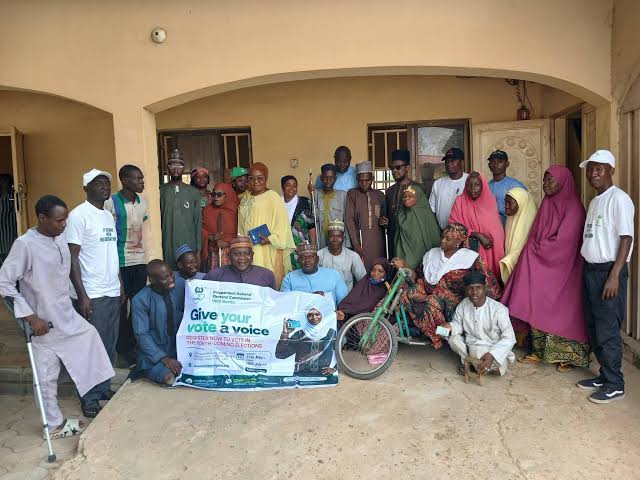
The Chairman of the Kano State Initiative for Persons with Special Needs, Abdurraq Zango, has raised concerns over the financial and institutional obstacles limiting the participation of persons with disabilities (PWDs) in Nigeria’s political system ahead of the 2027 general elections.
Zango said the high cost of nomination forms imposed by political parties was discouraging qualified persons with disabilities from seeking elective positions.
Speaking in an interview with the News Agency of Nigeria (NAN) in Kano, he maintained that many PWDs possessed the knowledge, leadership skills and determination required to hold public office but lacked the financial resources to pursue their political ambitions.
High Nomination Fees Discourage PWD Aspirants
According to Zango, the financial demands associated with contesting elections remain a major challenge for persons with disabilities who aspire to represent their communities.
He explained that the cost of obtaining nomination forms, alongside other expenses required during party primaries, places many prospective candidates at a disadvantage.
The disability rights advocate argued that political participation should be accessible to every qualified Nigerian, regardless of physical or other disabilities.
He stressed that persons with disabilities could contribute meaningfully to governance, public policy and national development if given fair opportunities.
Zango also accused many political parties of failing to create adequate opportunities for PWDs during candidate selection and political appointments.
He called for greater recognition of their leadership potential and more inclusive political structures.
Kano Group Questions Implementation of Disability Laws
Beyond the cost of elections, Zango expressed concern over what he described as the poor implementation of existing laws intended to protect the rights of persons with disabilities.
He referred to the Discrimination Against Persons with Disabilities (Prohibition) Act, 2018, which provides a legal framework for promoting accessibility, equal opportunities and protection against disability-based discrimination.
The legislation also provides for persons with disabilities to constitute at least five per cent of the workforce of public organisations, as far as practicable.
Zango argued that although Nigeria had established legal protections covering employment and access to essential services, implementation remained insufficient.
He said stronger enforcement was needed to ensure that the intended benefits reached persons with disabilities.
Kano Disability Law Also Raises Inclusion Expectations
The chairman further referred to Kano State’s disability legislation, enacted in 2022, which he said provides for two per cent of employment opportunities to be allocated to persons with disabilities.
He expressed concern that the provision had not been adequately implemented.
According to him, inclusion efforts should move beyond employment opportunities and appointments to create better conditions for persons with disabilities seeking elective offices.
Zango acknowledged that some state governments, including Kano, had appointed special assistants to address disability-related concerns.
However, he maintained that such appointments should be complemented by broader measures that enable persons with disabilities to participate directly in political leadership.
PWDs Demand Greater Political Representation Ahead of 2027
Zango called on political parties and relevant authorities to address the financial and structural barriers affecting aspiring candidates with disabilities.
He said reducing these obstacles would create more opportunities for PWDs to contribute to decision-making at local, state and national levels.
The chairman also urged greater commitment to implementing disability inclusion laws and expanding political opportunities for persons with special needs.
His concerns come as political stakeholders prepare for the 2027 general elections, with questions surrounding the cost of political participation and equal access to elective positions remaining central to Nigeria’s democratic development.