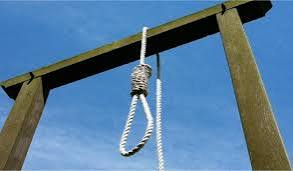
Most Governors in Nigeria are hesitant to sign death warrants due to several complex reasons.
Freedomonline reports that their stand may not be far from some moral and religious convictions.
Pundits say many governors are deeply influenced by their personal beliefs, with both Christianity and Islam emphasising mercy and forgiveness.
According to findings in Kaduna, Kano and Katsina States,this makes them reluctant to authorise such pending executions.
Also, some of them take such actions due to the fear of wrongful convictions.
Nigeria’s legal system is often criticised for delays, weak investigation procedures, and lack of access to quality legal representation, raising concerns about potential wrongful convictions.
Others hinged their procrastination political sensitivity as they think signing a death warrant can be politically risky, potentially alienating voters or interest groups who oppose capital punishment.
Also, some governors posit that they may face public backlash or protests from human rights groups and religious bodies.
Similarly, the lengthy appeal process, which can take years, also contributes to the delay. Inmates on death row have the right to appeal to the Court of Appeal and even the Supreme Court.
This makes the governors cautious about signing death warrants without exhausting all legal avenues.
Nigeria’s signatory status to international human rights treaties, which often criticize capital punishment, may also influence governors’ decisions.
Some governors may simply believe in the sanctity of life and oppose capital punishment on ethical grounds.
These factors combined create a de facto moratorium on executions, leaving thousands of condemned inmates in limbo.
Some experts and citizens are calling for a review of the constitutional provision, suggesting that Judges should sign death warrants instead of governors.
In Kano, residents of the state have expressed divergent views on whether to retain or abolish the death penalty in the country’s constitution.
Some have argued that the governors lack of commitment to carrying out death sentences makes the provision irrelevant, while others insist it should remain part of the law.
Prof. Yahaya Bunkure, of the Department of Science Education, Bayero University, wholeheartedly support the constitutional provision under Section 212 of the Nigerian Constitution.
It empowers state governors to lend their consent before the execution of individuals sentenced to death.
This provision is a critical safeguard that underscores the gravity of capital punishment.
It ensures that the decision to end a life is not taken lightly but is subject to a final review by an elected official who represents the will of the people.
He said, “However, I believe there is a need for an amendment to this section to compel governors to strictly adhere to its provisions.
“This amendment should ensure that all possible avenues, including those of amnesty and adherence to the rule of law, are exhausted before any execution can proceed.
“By doing so, we would reinforce the integrity of our judicial system, promote transparency, and ensure that mercy and justice are not just options but obligations that governors must consider seriously.”
Alhaji Abubakar Malam of Unguwar Wambai, suggested amending the law to allow for life imprisonment or a specific number of years at the court’s discretion.
He said that Section 212 of the 1999 Constitution gives governors the power of prerogative of mercy over convicts, but argued that this power is not absolute and can be subject to certain conditions.
Malam said, “The debate highlights the complexities surrounding the death penalty and the need for careful consideration of its implications.”
Alhaji Abdulsalam Mohammad, a resident of Unguwa Uku in Tarauni Local Government Area, lamented Nigerian governors have failed to sign death warrants for condemned criminals over the past two decades.
He suggested that the legislature should amend the constitution to make it mandatory for governors to sign death warrants within a specified timeframe, such as three months, after a Court verdict is pronounced, to uphold justice and promote the rule of law.
Mr Paul Israel, of Igbo Road in Sabon Gari Area, believed that notorious criminals who had committed heinous crimes and sentenced to death should be executed.
He decried that governors often fail to sign death warrants, leading to overcrowding in prisons and the potential for released inmates to return to criminal activities.
Israel advocated compelling state executives to sign death warrants, arguing that this would help curb rising criminality in the country.
Some individuals alleged that governors are hesitant to sign death warrants due to corruption, in spite of it being constitutional.
They recalled that during the military era, administrators were more inclined to enforce the law, which maintained order in society.
Some individuals, like Mr Friday John, advocated abolishing the death penalty, citing that many developed countries had done so.
They argued that governors should not sign death warrants, emphasising the value of life.
Alhaji Musa Abdullahi of Hotoro Quarters, who opposed abolishing the death penalty, instead urged governors to fulfill their statutory responsibility of signing death warrants.
He warned that failing to apply the law in cases of treason, homicide, and armed robbery could have repercussions, and argued that the death penalty serves as a deterrent to potential offenders.
In Katsina State, a legal practitioner, Mr Abdullahi Muhammad, has called for the removal of state governors consent in signing death warrant of convicts.
Muhammad made the call on Tuesday in an intervew with our Correspondent
He said that the call has become imperative because in the history of the country since the return to the democracy in 1999, very few governors signed the death warrant of convicts.
Muhammad observed that the governors were reluctant to sign such death warrants even after the courts convicted a person.
“Just remove the governor’s consent on the issue of whether the warrant should be signed to execute the convict or not,” he said
According to him, that has been costing the government a lot of money, hence the need to review the law in the interest of justice.
He further revealed that had been contributing to the prison congestion in the country.
“If you visit Correctional Centers, you see some convicts that have already exhausted their appeals, but still waiting for execution.
“We really need to review the law to allow for the execution of such persons.
“That will even serve as a deterrent to others who might want to commit similar capital offence,” he said.