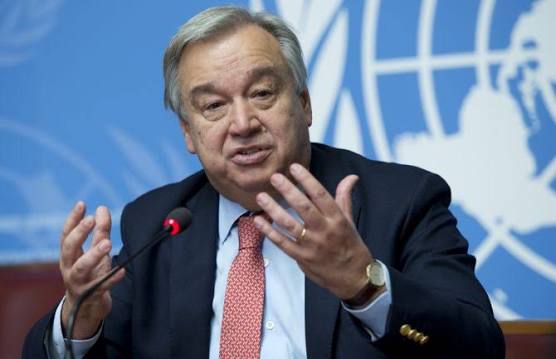
The Secretary-General of the United Nations, António Guterres, has cautioned that the ongoing conflict in the Middle East risks expanding into a wider crisis if urgent steps are not taken to de-escalate tensions.
Guterres expressed concern that the continuing military actions and retaliatory attacks across the region are inflicting severe hardship on civilians and could destabilise not only the region but also the global economy.
According to him, the intensifying confrontation threatens international stability and could have serious consequences for vulnerable populations worldwide.
He urged all parties involved in the conflict to halt hostilities and return to meaningful diplomatic negotiations.
The warning comes as hostilities between the United States, Israel, and Iran continue to escalate.
The confrontation has entered its seventh day, with reports of ongoing airstrikes and retaliatory attacks across several locations in the Middle East.
Also commenting on the situation, Tom Fletcher the UN Emergency Relief Coordinator, said the international community is facing what he described as a moment of “grave danger”.
Fletcher criticised the huge financial resources being devoted to warfare while humanitarian assistance budgets are being reduced in many parts of the world.
He warned that the expanding conflict could create a humanitarian crisis that stretches beyond the Middle East.
The United Nations Human Rights Office has also described the situation as a major humanitarian emergency that requires urgent international attention.
Similarly, the UN High Commissioner for Human Rights, Volker Türk, warned that the conflict is gradually drawing in more actors and called on governments to take immediate steps to reduce tensions.
Meanwhile, Amir Iravani the Permanent Representative of Iran to the United Nations, stated that his country is not seeking further escalation.
However, he emphasised that Iran would defend its sovereignty and territorial integrity if necessary.
Iravani urged member states to condemn what he described as aggression against his country and called on the United Nations Security Council to take decisive action.
He warned that failure by the council to respond promptly could lead to serious consequences for international peace.
UN humanitarian officials have emphasised the urgent need for restraint and dialogue.
Fletcher reiterated that the priority should be an immediate ceasefire and renewed diplomatic engagement in line with the principles of the United Nations Charter.
He also stressed the importance of safeguarding humanitarian workers who continue to assist civilians affected by the fighting.
According to him, the growing crisis risks diverting global attention and resources away from other major conflicts and humanitarian emergencies, including those in Sudan, the Democratic Republic of the Congo, and Ukraine