A high-level delegation from the United States (U.S.) Congress, led by U.S. Representative Riley M. Moore, is in Nigeria for crucial security consultations with top Nigerian officials.
The visit follows renewed international concern over rising insecurity in the country and came shortly after U.S. President Donald J. Trump re-designated Nigeria as a “Country of Particular Interest” due to a reported surge in killings across several regions.
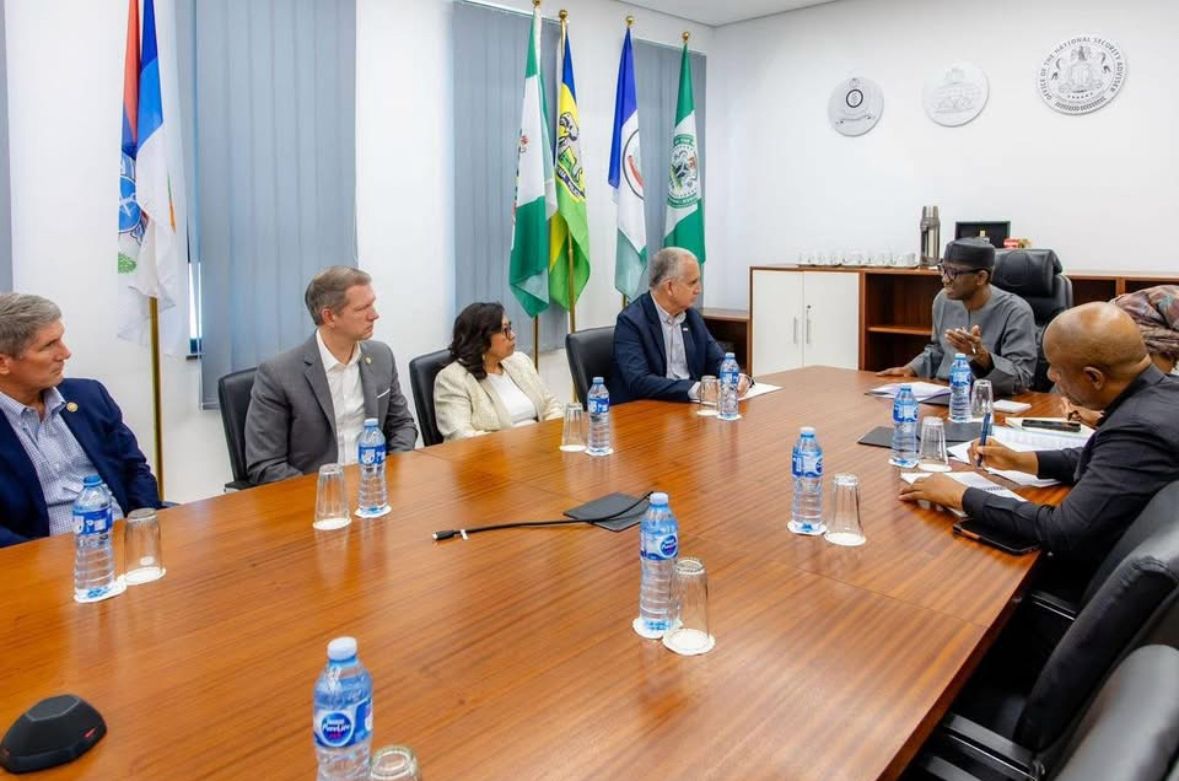
The American delegation, comprising bipartisan congressmen and congresswomen, met with Nigeria’s National Security Adviser, Mallam Nuhu Ribadu, in Abuja. Ribadu — a former anti-corruption chief and widely regarded as one of Nigeria’s toughest security reformers — received the team on behalf of President Bola Ahmed Tinubu.
The photographs from the meeting underscore its significance: senior American lawmakers seated with Nigeria’s top security leadership in a moment of shared concern and diplomatic urgency.
A Delegation With a Message
Representative Riley Moore, from West Virginia, has recently been vocal in the U.S. Congress about the escalating violence in Nigeria. He introduced a resolution condemning what he described as widespread killings of civilians, including Christians, and urging stronger U.S. engagement.
His delegation’s mission was clear: assess the security realities firsthand, deepen cooperation, and explore ways the U.S. can support Nigeria’s counterterrorism efforts.
While Washington has expressed serious concern about religiously-motivated violence, Nigerian officials have emphasised that the problem is far broader. Terrorist groups, bandits, separatist militias, and criminal networks have carried out attacks affecting Nigerians of all faiths and backgrounds.
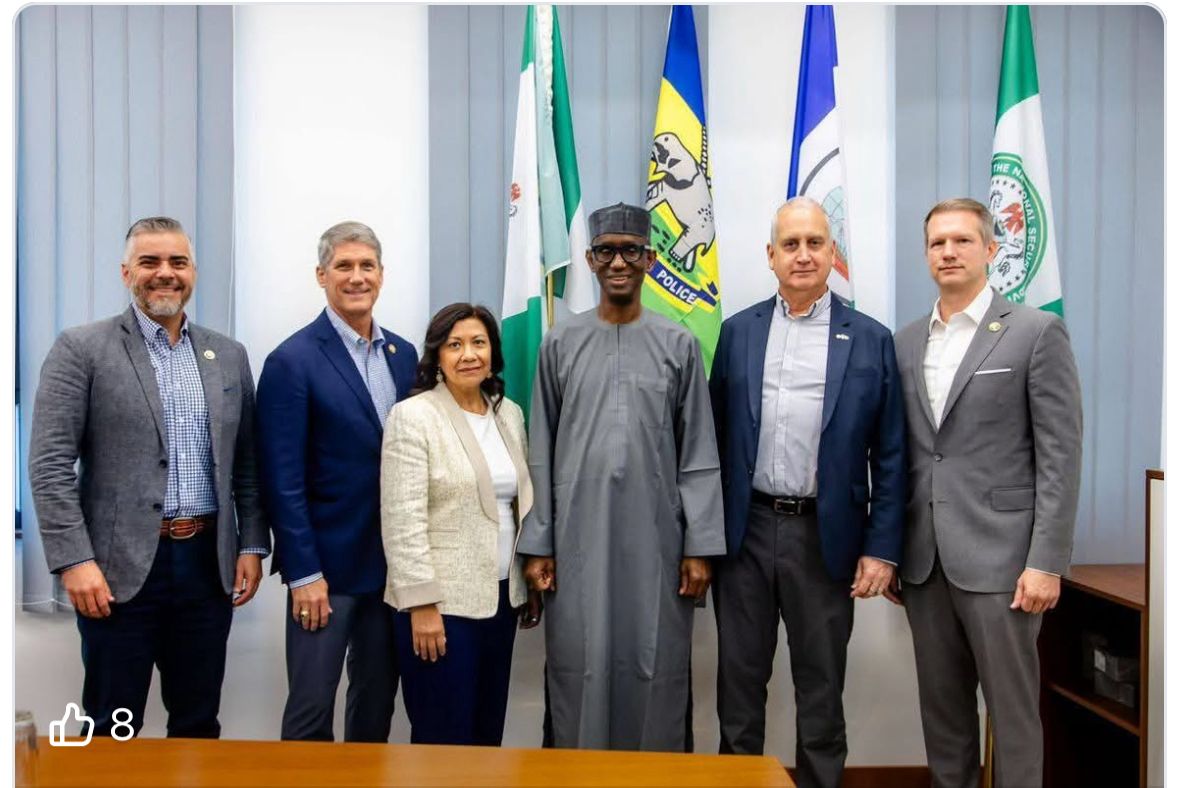
The meeting with Ribadu offered an opportunity to clarify these dynamics, align perspectives, and reinforce Nigeria’s central role in addressing the crisis.
A Nation Under Siege
Recent months have seen a troubling increase in attacks across Nigeria.
• Northern states continue to face threats from Boko Haram, ISWAP, and heavily armed bandit groups.
• The Middle Belt suffers repeated communal killings and village raids.
• The South-East grapples with kidnappers, militant splinter groups and violent criminal gangs.
• Highway kidnappings, mass abductions, and rural massacres have become more frequent, spreading fear and eroding public trust.
These developments have alarmed international partners, including the United States, the European Union and neighbouring African states. But while the world can assist, many analysts insist that the long-term solution lies in Nigeria’s hands.
Tinubu’s Recent Security Initiatives
Since taking office, President Bola Ahmed Tinubu has unveiled several initiatives aimed at restructuring Nigeria’s security architecture and strengthening coordination across agencies. These include:
• Enhanced intelligence-sharing between domestic and international partners.
• Deployment of special forces to terrorism-prone areas.
• Reorganisation of military commands to improve rapid response.
• Approval of new defence procurement agreements with friendly nations.
• Direct involvement of the NSA’s office in harmonising counterterrorism strategy.
The Nigerian delegation present at the U.S. talks included the Attorney General, the Chief of Defence Staff, military intelligence chiefs, and senior police officials — a strong signal that President Tinubu’s administration is approaching the crisis with coordinated seriousness.
Nigeria Must Lead — Partners Must Support
The U.S. delegation stressed America’s readiness to provide technical support, training, equipment, and intelligence. But both sides agreed that Nigeria must take the lead. No foreign nation can secure Nigeria’s communities; the responsibility lies with the Nigerian state.
International help can strengthen Nigeria’s hand, but only Nigerian leadership can change the security trajectory.
In this context, Ribadu reaffirmed Nigeria’s commitment to protecting all citizens, regardless of religion or ethnicity, and emphasized that the government will not allow external narratives to fracture national unity.
A Six-Month Window for Results
With the new partnership framework emerging between Abuja and Washington — and with President Tinubu’s recent internal security reforms — there is cautious optimism that progress is possible.
But Nigerians are weary of promises. They want results.
It is, therefore, reasonable to give this government six months to demonstrate clear, measurable improvements.
• Major terror and bandit networks in the North must be dismantled.
• Kidnapping corridors must be broken.
• Rural communities must feel safer.
• Violent gangs and separatist militias in the South-East must be neutralised.
• Citizens must begin to see the return of peace.
If after six months insecurity remains largely unchanged, the government must be held fully accountable.
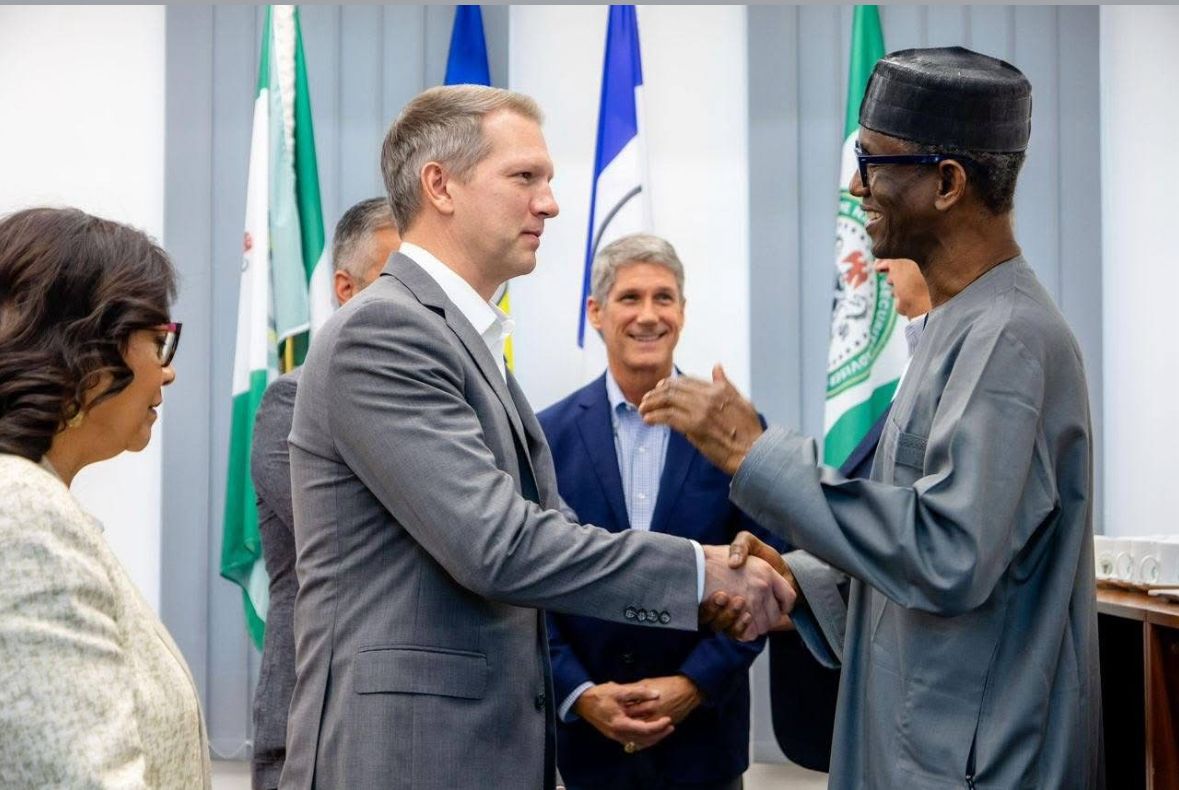
But if progress is achieved — however incremental — it will justify the renewed domestic efforts and the strengthened international cooperation witnessed during the Moore-Ribadu meeting.
Conclusion
The visit of the U.S. congressional delegation, led by Representative Riley Moore, marks a significant moment in Nigeria’s security diplomacy. It sends a clear message: the world is watching, concerned, and willing to help — but Nigeria must lead.
With firm political will, strategic reforms, and responsible international partnership, this country can overcom terrorism, kidnapping, and banditry. The coming six months will be critical in determining whether the Tinubu administration can turn intent into impact and restore safety and confidence across the nation.
*By Professor Steve Azaiki, OON
Chairman US – Africa Centre for Leadership, Atlanta Georgia.
Chairman Statekraft Consultants & Global Partners (Public Relations strategist).