


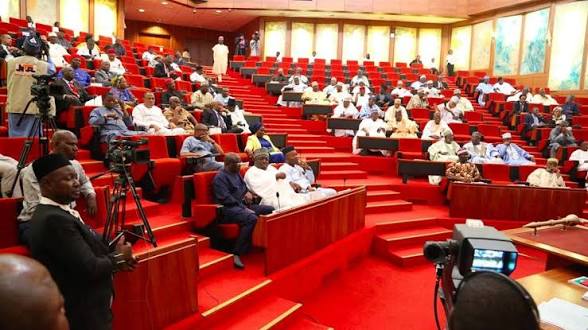
The Nigerian Senate has passed two bills seeking to establish federal universities specialising in agriculture and teacher education in Delta and Cross River states.
The proposed institutions are the Federal University of Agriculture, Orogun, in Delta State, and the Federal University of Education, Ogbudu, in Cross River State.
Lawmakers approved the bills during Thursday’s plenary after considering reports submitted by the relevant Senate committees.
The legislation is intended to expand access to specialised tertiary education, strengthen agricultural training and improve the development of qualified teachers in Nigeria.
Senate Approves Agriculture University Bill for Delta
The Federal University of Agriculture Act Amendment Bill, 2026, seeks to amend existing legislation to provide for a federal agricultural university in Orogun, Delta State.
Presenting the committee’s findings, Senator Anthony Ani, representing Ebonyi South, said the proposed institution would support agricultural development and encourage improved farming practices.
Ani presented the report on behalf of the chairman of the Senate Committee on Agricultural Colleges and Institutions.
He explained that the committee had reviewed the proposed legislation and found it consistent with the required legislative drafting standards.
The committee recommended its passage, citing the importance of agricultural education to Nigeria’s development.
The proposed university is expected to provide opportunities for specialised learning and research in agriculture, subject to the completion of the necessary legal and regulatory processes.
Cross River Education University Bill Also Passes
The Senate also approved the Federal University of Education, Ogbudu, Cross River State Establishment Bill, 2026.
The legislation seeks to establish a university focused on teacher education and the development of skilled professionals for Nigeria’s education sector.
Presenting the committee’s report, Senator Muntari Dandutse, representing Katsina South, said the proposed institution would help address the demand for qualified teachers.
He explained that the bill would provide a legal framework for upgrading an existing federal college of education into a university.
According to Dandutse, the proposal would make use of available facilities, personnel and other resources to expand access to higher education.
The senator said the proposed institution would offer learning opportunities without discrimination based on race, religion, gender or political beliefs.
Stakeholders Supported Cross River University Proposal
Dandutse disclosed that the Senate committee held a public hearing on the education university bill in May 2025.
He said stakeholders who participated in the hearing supported the proposal to establish the institution.
The committee subsequently recommended that the Senate approve the legislation.
According to the senator, upgrading the existing college would create additional opportunities for students seeking higher qualifications in education-related disciplines.
The proposal also aims to strengthen teacher preparation and professional development within Nigeria’s education system.
Lawmakers Complete Third Reading of Both Bills
Following the presentation of the committee reports, senators considered the bills in the Committee of the Whole.
The chamber examined the proposed legislation clause by clause and adopted the relevant provisions and schedules.
Both bills were subsequently read for the third time and passed through voice votes.
The Senate’s approval represents an important stage in the legislative process, although further constitutional procedures may still be required before either proposal becomes law.
Akpabio Calls for Compliance With NUC Standards
Senate President Godswill Akpabio commended the committees and lawmakers involved in considering the legislation.
He expressed hope that the proposed institutions would expand educational opportunities and contribute to development in their host communities and beyond.
Akpabio also emphasised the importance of complying with standards set by the National Universities Commission (NUC).
He urged the institutions’ management teams to ensure that academic programmes, facilities and administrative arrangements meet applicable regulatory requirements.
The Senate President said maintaining recognised academic standards would be important to the credibility of qualifications awarded by the universities.
What Happens Next?
The passage of the bills does not automatically mean the universities can begin admitting students.
The proposals must complete the applicable legislative and presidential assent processes before they can become law.
The institutions would also need to satisfy relevant regulatory, administrative and operational requirements before commencing university-level academic activities.
If the legislation receives the necessary approvals, the proposed universities could expand specialised training in agriculture and education while creating additional tertiary education opportunities in Delta and Cross River states.