Sahara has called for stronger mobilisation of sustainable investment and climate finance to accelerate Africa’s development, strengthen economic resilience, and create lasting prosperity across the continent.
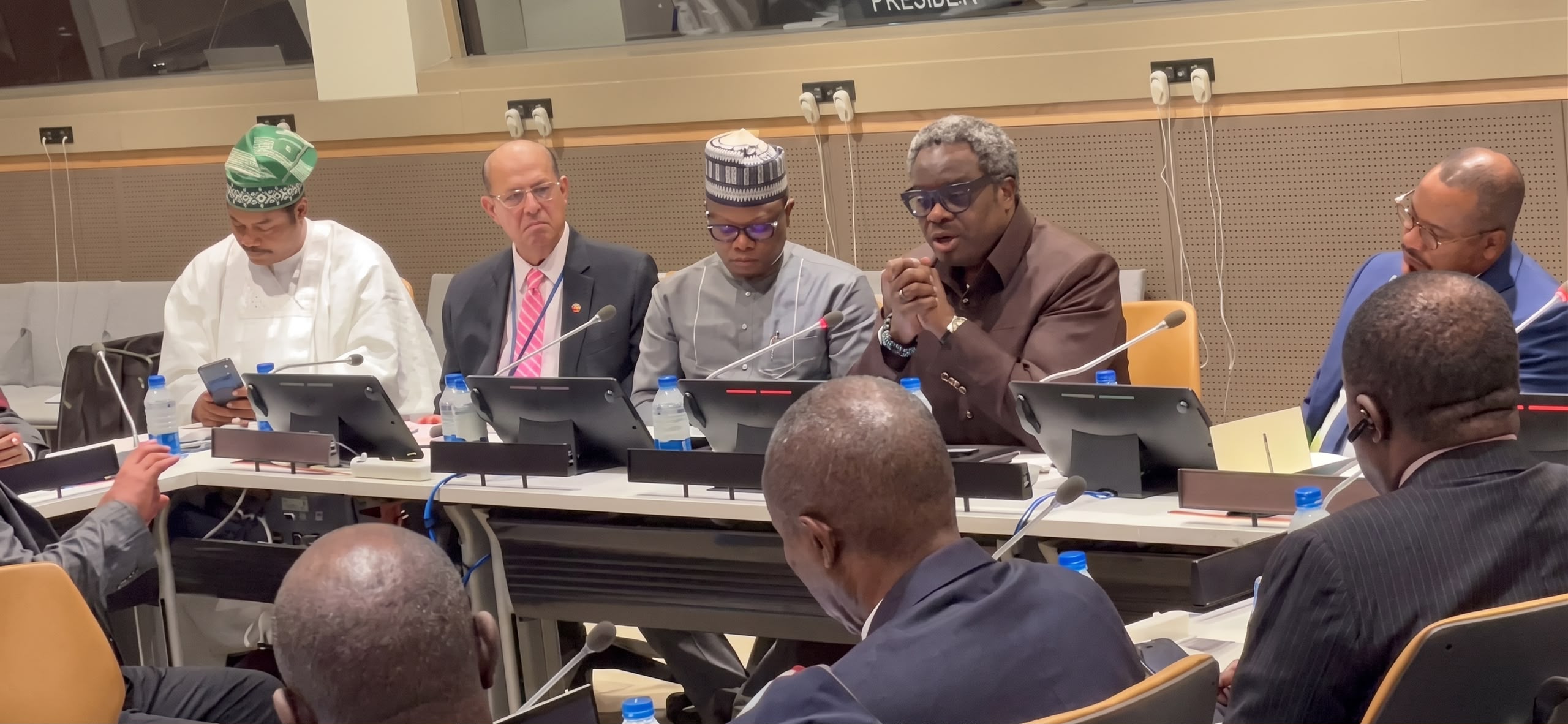
Speaking at a United Nations General Assembly (UNGA) roundtable on Sustainable Global Investment, Economic Resilience and Climate Financing, Dr. Kola Adesina, Group Managing Director, Sahara Power Enterprise Group, said Africa’s growth ambitions depend on building productive economies that can withstand economic, environmental, and geopolitical shocks.
According to Adesina, sustainable investment, economic resilience, and climate finance should be pursued as interconnected priorities, particularly as Africa continues to face significant infrastructure, energy, food security, and employment challenges.
Experts say the scale of the opportunity in Africa is substantial as almost 600 million people in Sub-Saharan Africa lack access to electricity, in addition to a continent-wide annual infrastructure financing gap of between US$68 billion and US$108 billion.
“Africa’s most pressing challenge is expanding its productive capacity at scale. We need sustained investment in energy, infrastructure, industry, agriculture, and enterprise development to create jobs, strengthen competitiveness, and support long-term resilience,” Adesina said.
He noted that the global investment landscape presents significant opportunities for Africa. Foreign direct investment reached approximately US$1.6 trillion in 2025, while assets linked to sustainable investment strategies have grown to US$16.7 trillion globally, reflecting increasing investor demand for projects that deliver both financial and developmental value.
Adesina highlighted climate finance as a critical enabler of resilient growth, particularly as African economies face increasing exposure to droughts, floods, extreme heat, and other climate-related risks despite contributing less than 4% of global greenhouse-gas emissions.
“Africa requires substantial investment not only to grow, but also to protect the infrastructure, businesses, food systems, and communities that underpin development,” he said.
He noted that African countries require an estimated US$277 billion annually to implement their climate commitments, compared with climate-finance flows of roughly US$30 billion annually, underscoring the need for innovative financing structures that can unlock more capital for mitigation and adaptation projects.
Drawing from Sahara’s experience, Adesina highlighted the company’s investments across LNG, LPG, gas-to-power infrastructure and logistics, alongside its commitment to a net-zero ambition by 2060 through strategic gas infrastructure development, renewable energy integration, and nature-based solutions.
The discussion aligns with Sahara’s Beyond XXX platform, a future-focused commitment to advancing sustainable development through investments, innovation, talent, collaboration, environmental stewardship and solutions that create long-term value across Africa and beyond.
Adesina urged stronger project preparation, increased mobilisation of African institutional capital, deeper local-currency financing markets, and greater regional collaboration in energy, transport, and logistics infrastructure.
“Africa’s opportunity lies in building resilient prosperity, where investment translates into productive capacity, jobs, reliable infrastructure, and sustainable economic growth that endures for generations. That is the kind of future sustainable investment and climate financing can help unlock across the continent,” he added.