

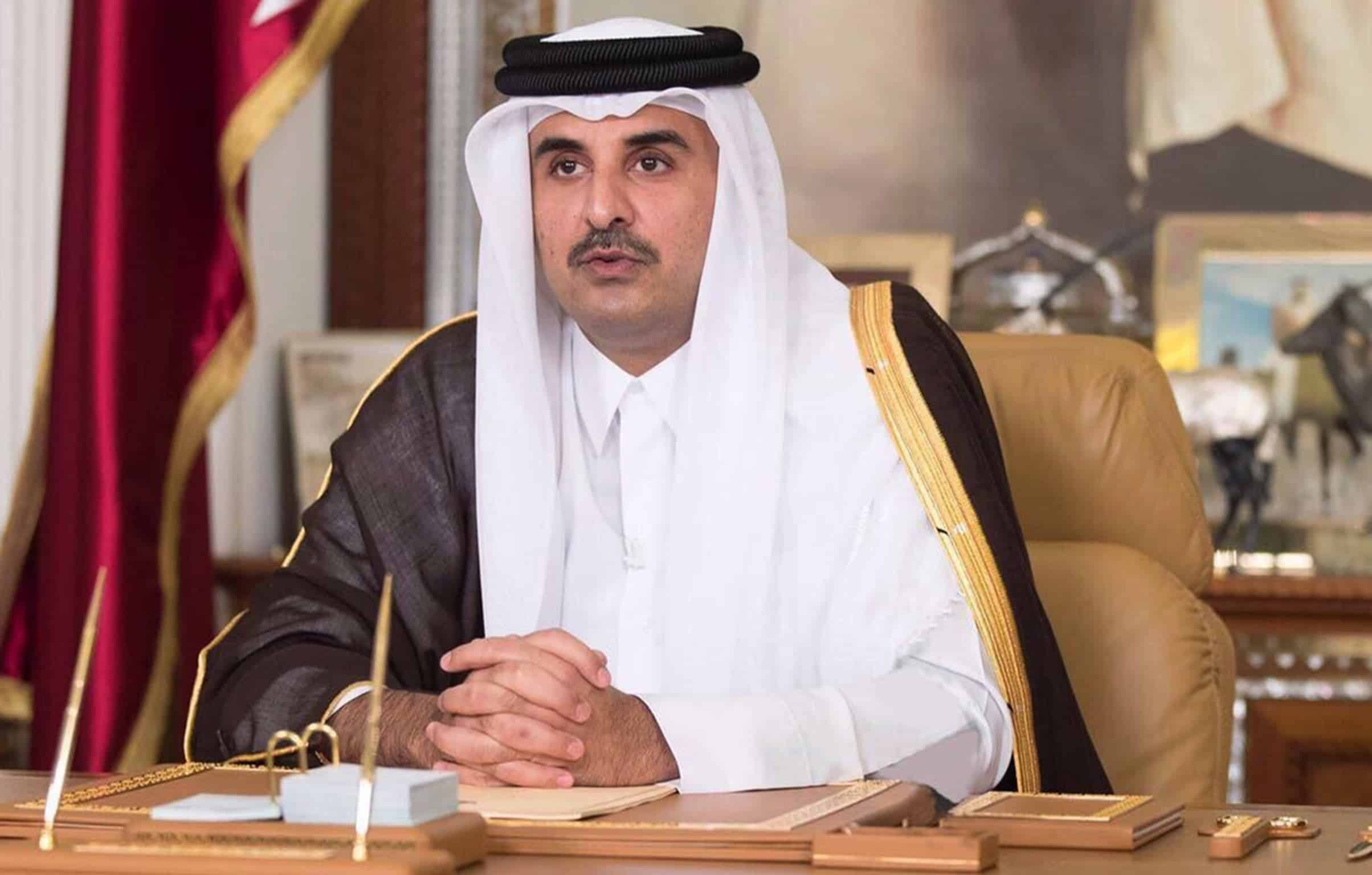
Qatari Emir, Tamim bin Hamad Al Thani, is skipping an annual Gulf summit set to be held in Saudi Arabia on Tuesday, despite Doha’s recent confirmation of talks it held with Riyadh which could lead to an end to a Gulf dispute that began more than two years ago.
The summit brings together the six countries of the U.S.-allied Gulf Cooperation Council (GCC): Saudi Arabia, the United Arab Emirates (UAE), Bahrain, Kuwait, Oman and Qatar.
This year’s summit is held amid increased tension following attacks that Saudi Arabia and its allies blamed on Iran.
Earlier this year, several vessels and tankers were sabotaged in the Gulf of Oman and in September, two Saudi oil facilities were attacked.
The summit also comes amid mass protests in Iraq and Lebanon, where Iran’s allies in both countries are facing their biggest opposition in years.
Kuwaiti Emir Sabah al-Ahmed Al Sabah and Bahrain’s King Hamad bin Isa Al Khalifa plan to attend the GCC’s 40th summit, while Oman’s delegation is led by Deputy Prime Minister Fahd Al Said.
Qatari Prime Minister Abdullah bin Nasser Al Thani will head his country’s delegation to the summit, the Qatari News Agency reported.
This year’s representation is higher than last year’s when Qatari Minister of State for Foreign Affairs, Sultan al-Muraikhi, represented the Gulf emirate.
The Qatari premier was in Saudi Arabia in May attending emergency Gulf and Arab League summits.
This year’s meeting comes after Qatar confirmed it had recently held talks with Saudi Arabia in a bid to end a Gulf rift, describing the negotiations as progress after more than two years of stalemate.
The Gulf row began in June 2017 when Saudi Arabia, the UAE, Bahrain, and Egypt severed diplomatic and transport ties with Qatar, accusing it of supporting and funding terrorists, a charge that Doha denied.
The quartet demanded that Doha downgrade ties with Saudi Arabia’s regional rival Iran, but Qatar rejected that saying it is an “infringement of its sovereignty.”
Attempts by Kuwait and the U.S. to resolve the crisis – one of the most serious experienced by the GCC since it was created in 1981 – have failed.


Qatari Emir skips Gulf summit in Riyadh amid regional dispute


Leave a Reply







Latest Stories







© 2026 Published by SWAAYA LIMITED, Plot 20, Block G, Scheme 1, Residential 3, OPIC Beachland Estate, Lagos/Ibadan Expressway, Lagos. Gabriel Akinadewo, MD/CEO 08023010222, 08094000056, 08052097814.