*As students turn to AI, AskProf makes case for Learning Before Answers
https://AskProf.com
As artificial intelligence increasingly becomes part of students’ academic lives, an educator with more than four decades of professorial experience is pushing a different approach to the technology: AI should help students learn, not merely supply answers.
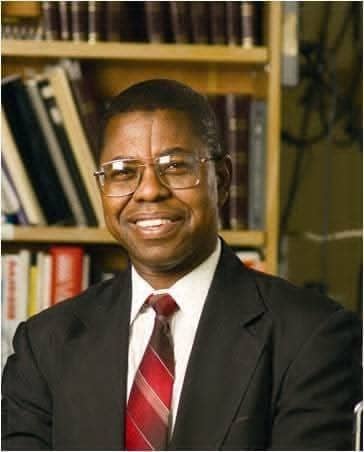
Professor Adedeji Badiru, creator of AskProf, an AI-powered educational platform, said the tool https://AskProf.com was developed specifically to encourage students to understand concepts, retain knowledge and think independently while taking advantage of the speed and accessibility of artificial intelligence.
Badiru said AskProf differs from general-purpose AI chatbots because education was not added to the platform as an afterthought; rather, the system was designed around the needs of students and teachers.
“AskProf is specifically designed and structured to encourage, inspire and motivate students to learn, acquire knowledge and retain information rather than just providing answers to students,” he said.
According to him, the platform supports examination-focused learning, including JAMB, WAEC and NECO in Nigeria, as well as SAT and AP for international users, allowing students to receive assistance within relevant curricula and examination formats.
Study sessions can also be converted into quizzes, flashcards and summary notes, while students can track topics covered and identify areas in which they repeatedly encounter difficulty.
Badiru said the approach seeks to address one of the concerns surrounding the increasing use of generative AI in education, the possibility that students may become more interested in obtaining instant answers than understanding the reasoning behind them.
“A study session doesn’t end as a conversation,” he said. “You can turn what you just worked through into flashcards or a quiz and test yourself on it.”
He added that AskProf was designed not only for students. Teachers can create classroom codes, admit students into a class and identify topics where learners are collectively struggling, potentially helping educators determine where additional teaching attention is required.
The emergence of AskProf, however, predates the current artificial intelligence boom.
Badiru said he registered the AskProf.com domain more than 20 years ago, originally intending to create a service through which students could send academic questions to him by email and receive responses.
The idea did not take off at the time because of the challenge of personally handling what could become a large volume of enquiries.
The rapid development of generative AI eventually provided a technological route to revive the concept.
Badiru said the introduction of ChatGPT accelerated his plans, while access to AI programmer Damilola Adelaja helped propel the development of AskProf.
The platform is also part of Badiru’s long-standing involvement in developing educational tools. In 1995, he developed “Badiru’s Equation of Student Success,” which he later expanded into a 2013 guidebook focusing on intelligence, common sense and self-discipline.
He had earlier developed desktop computer-based project scheduling software in 1982, which was subsequently shared with students, educators and researchers.
Badiru said AskProf is currently free because access is central to the philosophy behind the project.
“My learning philosophy is that we all learn better when we are all on the same page,” he said. “The only way we could all be on the same page is if we all have equal access, which is only possible if the access is free.”
He believes AI-powered educational support could prove particularly significant in Africa, where large class sizes can limit the amount of individual attention teachers are able to provide.
Badiru cautioned that AskProf was not designed to replace teachers or solve structural problems such as overcrowded classrooms.
Rather, he said, it could extend personalised academic support to students who might otherwise have no access to private tutoring.
“The core problem in much of African education isn’t talent or ambition. It’s ratio,” he said.
According to him, a student studying alone at night with only a mobile phone and limited data could use the platform to obtain explanations of concepts not fully understood in the classroom.
The system, he said, has also been designed to remain usable on modest mobile phones and limited data, an important consideration for students in many African communities.
Although Nigerian curricula are incorporated into the platform, Badiru said AskProf was conceived as a global educational tool and that many of its current users are in the United States.
Badiru also acknowledged one of the major concerns surrounding artificial intelligence: inaccurate information.
He said AskProf advises users to verify information from credible sources rather than treating AI-generated responses as unquestionable facts.
The platform also provides a feedback mechanism through which users can rate responses, while its broader philosophy encourages students to regard AI as a learning companion rather than a substitute for independent thinking.
“Don’t just use AI to get answers; use it to become smarter,” Badiru said.
Early responses, according to him, have come from parents, students and university lecturers, some of whom have independently introduced the platform to their students.
But Badiru said it was too early to claim that AskProf had produced measurable improvements in grades or examination results.
“It’s still early, and I’d rather be accurate than impressive,” he said.
“What I can point to is adoption, which is its own kind of early success. The measurable outcomes will come, and when they do, I’d like them to be verified rather than anecdotal.”
Badiru said native versions of AskProf for major mobile app stores are planned. The platform can presently be installed on a phone’s home screen through a browser and used in an app-like format.
Plans are also underway to pursue partnerships with schools, universities and other educational institutions. Badiru identified the proposed Oye-Ibidapo-Obe Technical University in Ilesha as one institution the project intends to engage.
For the professor, however, the longer-term ambition goes beyond growing another technology platform.
He wants AskProf to demonstrate that artificial intelligence can expand access to individualised learning without removing the intellectual effort that education requires.
“We want AskProf to serve as a proof that a tutor built with the right values, teach first, don’t just answer, can reach students a single professor never could in a lifetime of lecturing,” he said.
For educators confronting a generation of students with instant access to artificial intelligence, that proposition shifts the debate from whether students should use AI to a more consequential question: whether they are using it to avoid learning or to learn better.