From Bode Durojaiye, Oyo.
Political Science scholarship, like the rest of humanities and the social sciences, is significant to the realisation of the goal of the Nigerian state which is the protection of lives of citizens and the pursuit of their welfare.
But does Nigeria have a serious and proactive community of political scientists that is really alive to its responsibility in jumpstarting critical encounter within the Nigerian state?
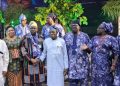
Recently, the Department of Political Science, Faculty of Social Sciences, University of Ibadan (UI), organised a public lecture to make a progressive statement about the state of Political Science and role of Political Scientists in contemporary times.
The event also featured fundamental tributes paid to the personalities and achievements of two worthy avatars of political science scholarship in the country, who had been conferred with Emeriti Professors, Bayo Adekanye and John Ayoade, by the premier university.
In the lecture entitled: ‘The Legitimacy of Political Science as a Discipline in Nigeria’, Permanent Secretary, Federal Ministry of Communication Technology, Dr. Tunji Olopa, who observed all manners of intellectual morbity afflicting the scholarship in the country, said “where it is now is precarious and troubling”.
He said it has become a troubling pastime to worry about the general state of education in the country, adding that this is because everyone recognises the role that education plays in the harnessing and positioning of the human capital of any nation for worthwhile and composite development.
“The situation, it is sad to say, has further degenerated. It has now become imperative to commence another diagnosis from a disciplinary perspective. What do the disciplines need to do to assist in nation building?’’
Olaopa, a political scientist and alumnus of UI,
posited that “today, political scientists are forced to beam the
searchlight of critical inquiry on the discipline and its scholarship. Specifically, the question is what is the state of political science in today’s Nigeria?’’
Recalling his days as a student of both undergraduate and
postgraduate levels, Olaopa noted that he was taught by the best, including the two celebrated and distinguished Professor emeriti.
“There were two distinctive things about the period we were taught in the university. The first is what we can call a disciplinary framework of engaged political scholarship that had Professor Adekanye espousing civil/military relationship, while Professor Ayoade taught federalism with a passion. The second distinctive thing was the robust cross fertilisation of ideas in the entire faculty of social sciences in which political science was not a mere onlooker.
“By its very nature, political science scholarship is concerned with themes and subject matter such as democracy, politics
and political institutions that are necessarily cross disciplinary
and embraces other social sciences and humanistic studies. This period was defined with collaborations across disciplines. Our experiences as students were defined by an active town and gown interaction that saw the likes of the late Professor Ojetunji Aboyade returning regularly to the classroom with insights drawn from national development planning in the Central Planning Office in Lagos and the planning studies programme he ran with Professor Akin
Mabogunje. These were the heady days of real scholarship. But obviously, something has gone critically wrong”.
On why political science is significant to the quest for social
order, the Permanent Secretary asserted that Nigeria, in all her plural complexities, constitute a real theatre for political analysis, pointing out that with religious fundamentalism and terrorism, unequal distribution of wealth, child abuse and trafficking elite insensitivity, infrastructure decay, social disorder , economic disequilibrium and even foreign policy listlessness, Nigerian political scientists are in for an interesting time.
On why the political science or the larger social science community is fighting for its life with regard to what it can contribute to the development crisis in the country, the renowned technocrat explained that government recognises only the sciences as being significantly critical to the resolution of the country’s development impasse.
“And so, her major funding goes to what she (government) considers important in 60:40 ratio. The 40 per cent is to be shared between the humanities and social sciences. Nigeria is not alone in this myopic educational policy.’’
Olaopa explained that the global educational awareness, which is focused right on the evolution of STEM fields which include science, technology, engineering and mathematics as the engine of national development anywhere is faulty.
According to him, “The essence of STEM, which originated from the United States of America is to place a nation on the cutting edge of development through a sound educational programme that transforms learning into a serious human capital empowerment. However, the basis of STEM is fundamentally flawed as it considered that development is
only possible through the coordinated expression and application of the four STEM disciplines. But the significant lesson to draw from this STEM discourse is the consequences of the relationship between knowledge and power. STEM is faulty because it is not hemmed by a competent social research that addresses socio cultural issues of knowledge application touching on social values, individual accountability and cultural implications that could turn an otherwise good knowledge into something terrible for human coexistence.
“If human well being is the end of all knowledge, what
role can political science play specifically in calibrating that well being in Nigeria?’’
Olaopa, therefore, called for the reconstitution of a serious and proactive community of political scientists mediated by the newly-branded Nigerian Political Science Association that is really alive to its responsibility in jumpstarting critical encounter with the Nigerian state.
While paying glowing tribute to the two political icons, Olaopa appreciated the roles they played in his intellectual development, their diligence in teaching and research, as well as their commitment to the development of political science, which, to him, went a very long way.
Earlier in his welcome address, Head of the Department of Political Science, Professor O.B.C. Nwolise, said that political scientists themselves need to hold and mould the discipline better to get the necessary societal recognition and support.