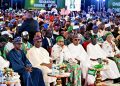
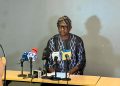
The 2027 General Election campaigns have commenced in full throttle. The direction of the rhetoric has raised crucial questions that should be bugging the minds of every Nigerian.
One such question is whether the issues that plague them are being addressed by the major political gladiators.
The answer is no!
There is a grudging consensus across the political spectrum that the Tinubu reforms have put a halt to the nation’s dangerous slide towards the precipice. But after three years of difficult adjustments to the painful reality of our current economic predicament, we are yet to feel the reliefs that are badly needed.
The campaigns have focused largely on personal issues that affect the political actors, not the masses.
What we hear are issues around the failure of President Tinubu to attend the United Nations General Assembly, Atiku’s alleged culpability in the Mambilla hydro power case, Peter Obi’s legacy debt as a former Anambra State Governor, and other personal issues that bear little relevance to the existential challenges of the people whose mandate they are seeking.
What people want to hear is how the cost of living can be reduced drastically to make rent, transportation, healthcare, education, food, power supply, fuel and other recurrent bills affordable.
How to address these costs should form the basis of the message of any serious politician in the present campaign season.
Nigerians have made significant sacrifices over the last three years. Fuel subsidy removal and foreign exchange reforms were presented as necessary measures to correct deep structural problems in the economy. The government has consistently argued that these reforms are intended to create a more sustainable economy in the long term. But the ordinary Nigerian cannot live on the promise of a better future indefinitely.
This is where the campaign conversation needs to change.

The question should no longer be simply whether the reforms were necessary. The more important question is what each candidate intends to do with the economic foundation that now exists.
How will food prices come down?
How will transportation become cheaper?
How will the cost of electricity be reduced for households and businesses?
How will affordable housing be made available to the growing population?
How will Nigerians access quality healthcare without being pushed into financial hardship?
How will wages and incomes increase in real terms rather than merely on paper?
These are not abstract policy questions. They determine whether a family can afford three meals a day, whether a young graduate can move out of his parents’ home, whether a small business can remain open, and whether a worker can survive after paying rent and transportation costs.
Recent economic data may show improvements in some headline indicators, but lower inflation does not mean that prices have returned to where they were before the crisis. A slower rate of price increases is not the same thing as cheaper food, cheaper transport or cheaper housing. This distinction needs to be made clear during the campaign. Nigeria’s headline inflation has fallen considerably from its earlier peak, yet renewed increases in petrol prices have once again placed pressure on household budgets.
The politicians therefore owe Nigerians more than slogans.
If a candidate promises cheaper petrol, Nigerians should be told how it will be achieved, how much it will cost the treasury and whether the arrangement is sustainable.
If a candidate promises millions of jobs, Nigerians should know what sectors will create those jobs, what investments will be required and how long implementation will take.
If a candidate promises cheaper electricity, the electorate deserves to know how generation, transmission and distribution will be improved and how the policy will be funded.
If a candidate promises to reduce food prices, the conversation should include agricultural productivity, transportation, storage, insecurity, access to credit and the cost of energy.
And if a candidate promises to reverse an existing policy, Nigerians deserve to know what will replace it and how the government intends to pay for the alternative.
This is particularly important because campaign promises without costings and implementation plans can easily become another cycle of political rhetoric. Nigerians have heard enough promises over the years. What is needed now is measurable commitment.
The 2027 election should therefore be a referendum on ideas, policies and delivery, not merely personalities.
There will always be political controversies. Allegations, counter-allegations, old records, personal histories and political disagreements will form part of every election. They have their place, particularly where they concern accountability and the character of public service.
But they should not become the centerpiece of an election taking place in a country where millions of people are primarily concerned about how to survive the next month.
The opposition has a responsibility to do more than tell Nigerians that the current government has failed. It must explain what it would do differently, how much those policies would cost and where the money would come from.
The ruling party also has a responsibility beyond asking Nigerians to be patient. It must demonstrate clearly how the sacrifices already made will translate into better living conditions and when Nigerians can reasonably expect to feel those improvements.
That is the conversation Nigerians should be demanding.
The 2027 election is not simply about who occupies Aso Rock. It is about what kind of economy Nigerians will live in, what opportunities will be available to their children and whether government can finally make basic necessities affordable for the majority.
The political class should therefore raise the quality of the campaign.
Tell Nigerians the problem.
Present the solution.
Explain the cost.
Give a realistic timeline.
And, most importantly, tell Nigerians how they will know whether you have delivered.
That is the campaign Nigerians deserve.
*Ladi Ayodeji, marriage counselor, author, media expert and philosopher, can be reached on 09059243004, WhatsApp only.