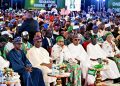
The Nigeria Labour Congress (NLC) on Sunday in Abuja suspended its nationwide strike over hike in electricity tariff and increase in the pump price of petrol in the country.
This is contained in a communique at the end of an emergency meeting of the National Executive Council (NEC) of the congress.
The communique, signed by Mr Ayuba Wabba and Dr Peter Ozo-Eson, President and General-Secretary of the congress respectively, stated that the suspension was with immediate effect.
The congress commended the leadership of the National Assembly and All Progressives Congress, led by Sen. Ahmed Bola Tinubu, for the interfacing between the labour and the government on the issue.
The communique said that after due consultation with NASS and the intervention of Tinubu, NEC with its constituents, resolved to suspend the strike that commenced on May 18.
“The congress will resume negotiation with government on the twin issues of hike in electricity tariff and increase in the pump price of petroleum products and any other issues that may arise thereof.”
The communique said that NLC ‘’remains committed to genuine dialogue within the framework of international established and recognised principles of representation.
“The congress will continue to resist wrong legislation, policies and programmes and will always act in the best interest of Nigerians.
“NLC remains the only pan-Nigerian organisation not affected by religion, region, creed, partnership or primordial sentiments.
“The congress urges the government to play by the rules in its engagement with its constituent parts, stakeholders and non-state actors as proof of its commitment to deepening our democracy”.
The communique therefore commended those who took part in the action in one way or the other and reaffirmed its commitment to the struggle.
It stated that the action was taken in the best interest of the poor and the weak and to also draw government attention to the danger of relying on the importation of petroleum products.
NLC urged the citizenry to be vigilant at all times, adding that the price of freedom remained eternal vigilance.
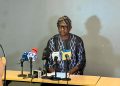
Meanwhile, Mr Bobboi Kaigama, the President of Trade Union Congress of Nigeria (TUC), on Sunday, said the union shunned the strike in the best interest of Nigerians.
Kaigama said this in Jalingo, Taraba State in an interview with newsmen.
He said that the country’s economy would have collapsed if the union had insisted on the old pump price regime of N86.50 or joined NLC to embark on the strike.
According to him, the old price regime became practically unsustainable given the facts and figures presented to the union by the Federal Government`s team during negotiations.
“Our economy is heavily dependent on crude oil sales and in the figures presented to us, NNPC made N550 billions on sales of crude and only N50 billions was remitted to the Federation Account.
“The chunk of N500 billions was used to import refined petroleum products.
“That was the reason why the three tiers of government in the last federation account meeting shared what was considered to be the least to be shared in the last 16 years.
“If we had insisted on the N86.50, our members would not receive salaries in the next two months.
“ So, when we saw this position. Instead of remaining dogmatic, we opted for negotiation on how to move forward to avoid the collapse of the economy, “ he said.
Kaigama said that the union signed an agreement with the Federal Government to address the issues of minimum wage and palliatives for Nigerians to cushion the effects of the increase.
“We also signed an agreement for the reconstitution of the board of Petroleum Products, Pricing and Regulatory Agency (PPPRA) to include members of organised labour so that we can monitor the template for the distribution of petroleum products from depots to the retail outlet.
“Part of that agreement was that all refineries must be brought to life and enabling environment provided for modular refineries to operate around the existing refineries.
“These modular refineries, we believe, would go a long way to help in the supply of our local consumption need, “ he said.
He advised governors to look inward on ways to grow their Internally Generated Revenue to enable them to meet the development needs of the people.
Kaigama said that the union would monitor closely the disbursement of bailout funds and would report any state that diverted the bailout funds to the EFCC and ICPC for necessary action.