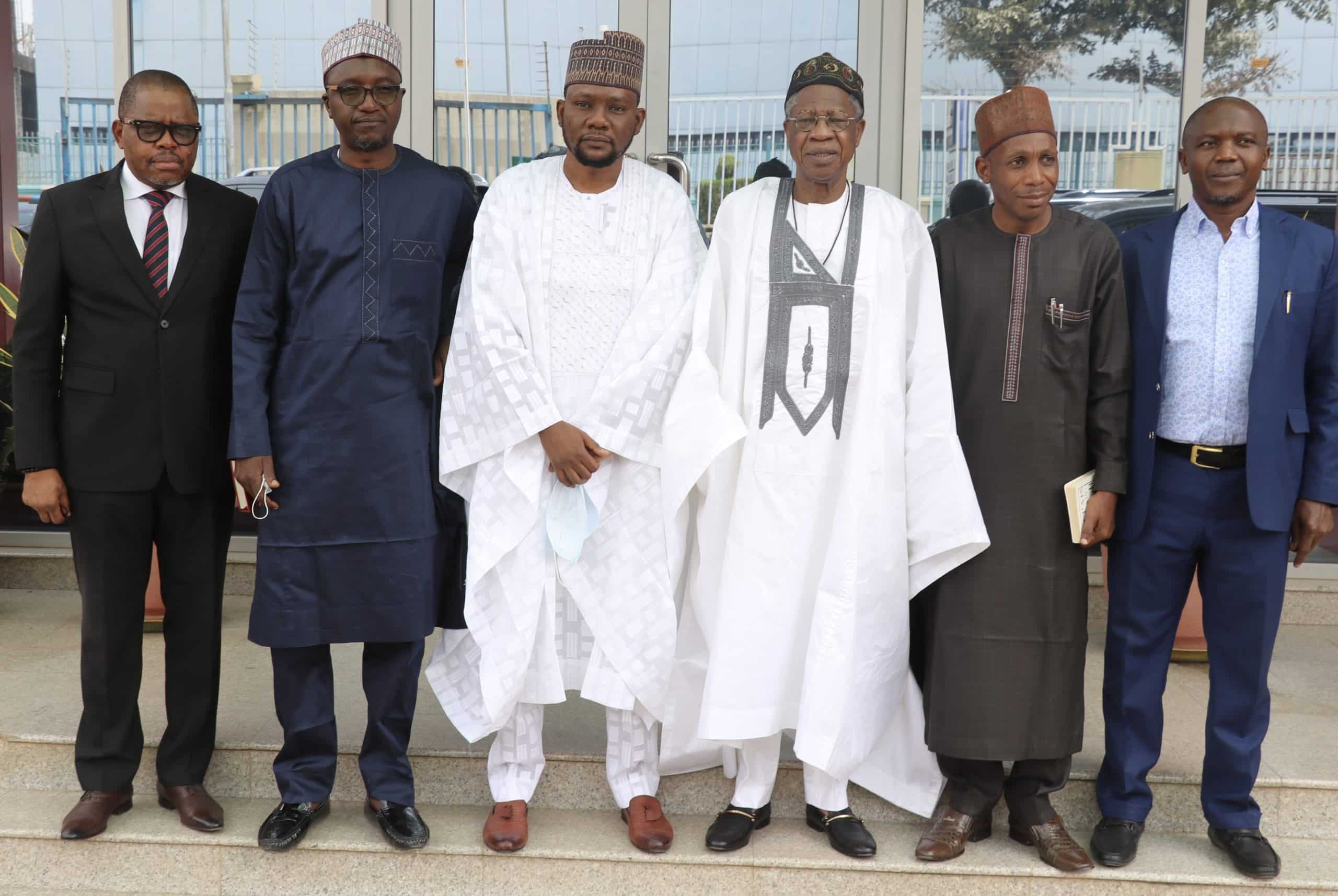
REMARKS BY THE HON. MINISTER OF INFORMATION AND CULTURE, ALHAJI LAI MOHAMMED, DURING A MEDIA VISIT TO DAILY TRUST ON MONDAY, 21 FEBRUARY 2022
PROTOCOL
Let me thank the management and staff of Daily Trust for hosting us
this morning. I am indeed glad to be here again, my third visit – if I
am not mistaken – to Daily Trust, since assuming office. Today’s visit
to Daily Trust also kickstarts our 2022 media tour.
2. I want to use this opportunity to congratulate Media Trust
Limited on the debut of their TV channel, Trust TV, which is already
making waves in the industry. I heard from the grapevine that I will
soon be invited to appear on the new TV channel. I await the
invitation. May I also congratulate the publishers of Daily Trust
Newspaper for their increasing use of infographics to deepen the
understanding of complex issues. It is said that a good infographic is
worth a thousand words. I urge you to keep up this innovation.
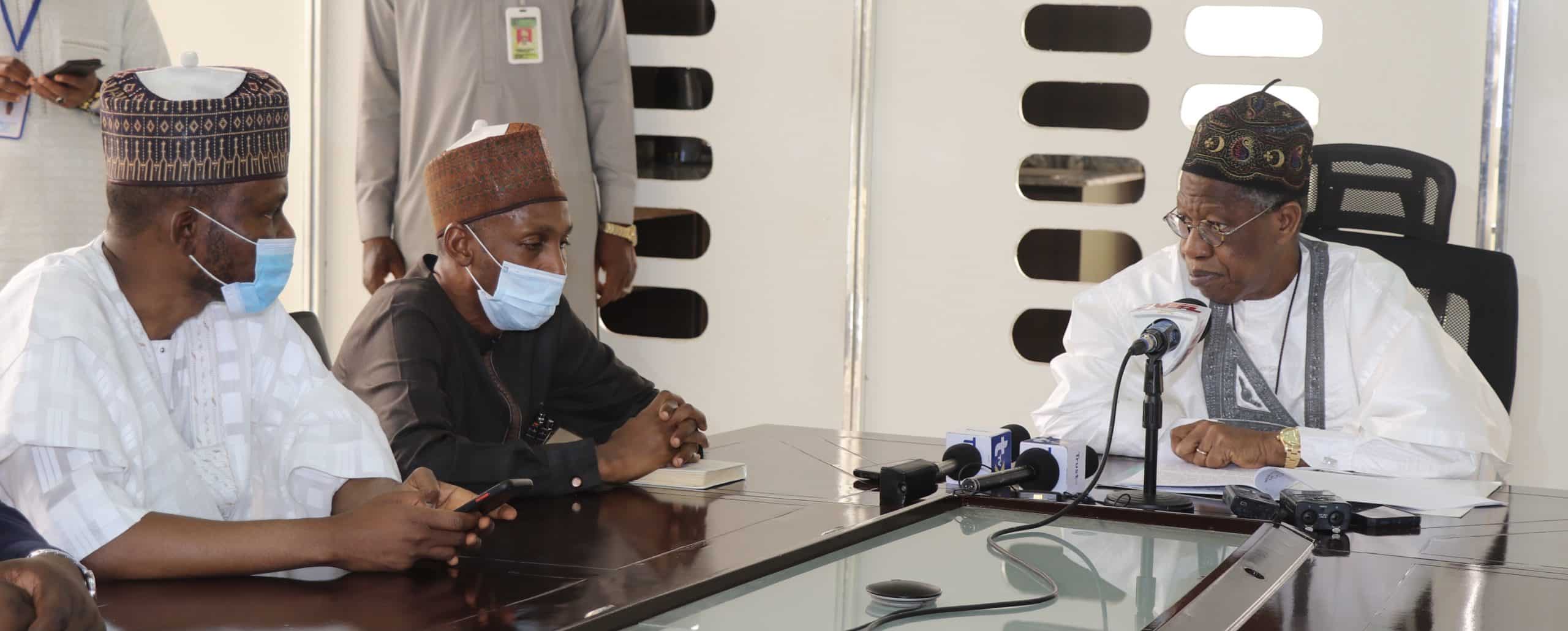
3. Please permit me to reiterate the fact that this Administration
continues to regard the media as an indispensable partner, and also
believes that a vibrant media is a prerequisite to the success of any
democracy. I have always said that Nigeria has one of the most vibrant
media ecosystems in the world, and I remain firm in this belief. That
is why the brand of adversarial journalism being practised by a
section of the press here in Nigeria, including Daily Trust, does not
appear to us a threat. Unpalatable as it may seem sometimes, this
combative or oppositional style is a stark reminder of the watchdog
role of the media.
4. Gentlemen, our visit today is coming at a time of great concern
across the country over the rising cases of ritual murders by
unscrupulous people, most of them very young, who are seeking to get
rich at all cost. We have therefore decided to use this opportunity to
begin the process of raising national awareness on this scourge. The
National Orientation Agency (NOA), an agency under our Ministry, is
already partnering with religious and traditional organizations as
well as NGOs to forge behavioural change, especially among the youth,
some of whom are afflicted by the get-rich-quick syndrome. In the days
ahead, the Federal Government plans to launch a national sensitization
campaign against ritual murders. Ahead of that, however, we are
calling on the media to please lend their strong voices to efforts to
stamp out this growing menace. I was delighted to read a newspaper
editorial on the scourge of ritual killings yesterday (Sunday). I
implore the Daily Trust, and indeed all media organizations, to join
the campaign against the scourge.
5. For those who may still be in doubt, ritual killings have assumed
a worrisome dimension in recent years. According to an NGO, Foundation
for Partnership Initiatives in the Niger Delta (PIND), 150 women and
girls were killed for ritual purposes between January 2018 and
December 2021. The NGO said the prevailing situation is driven by a
growing demand for human body parts for money-making. It added that
the trend endangers the safety and security of women and girls.
Recently, in Ogun State, four young men, one of whom is 18 years old,
murdered their 20-year-old female friend for money rituals. One of
them said they learnt about using human parts for money rituals from
social media. Of course, you are also aware of a case involving a
female student of the University of Jos who was allegedly killed by
her boyfriend for ritual purposes. These killings have been widely
reported by the media.
6. The fact that some of these ritualists said they learnt the
money-making tricks from some social media platforms has given a
further fillip to our campaign to rid social media of unwholesome
content. Call it social media regulation or whatever, no serious
nation today will allow its social media space to be suffused with
dangerous content. As we have said many times, we have no intention to
stifle the media or constrict the social media space. But we will not
relent in our efforts to ensure a responsible use of the social media
7. Many have also blamed Nollywood for featuring money rituals in
some of its movies, saying this has negatively influenced the
vulnerable youth. To mitigate this, I have directed the National Film
and Video Censors Board, the body set up to regulate the film and
video industry in Nigeria, to take this issue into consideration while
performing its role of censoring and classifying films and videos. I have also directed NFVCB to engage with stakeholders in the film industry in order to express the concerns of the government and Nigerians on the need to eschew money ritual content in their movies.
Finally, we appeal to religious, traditional and political leaders to
be part of efforts to reorientate our youth, in particular, to realize
that success comes through hard work, not money rituals.
8. Once again, I want to thank the management and staff of Daily
Trust for this warm reception.