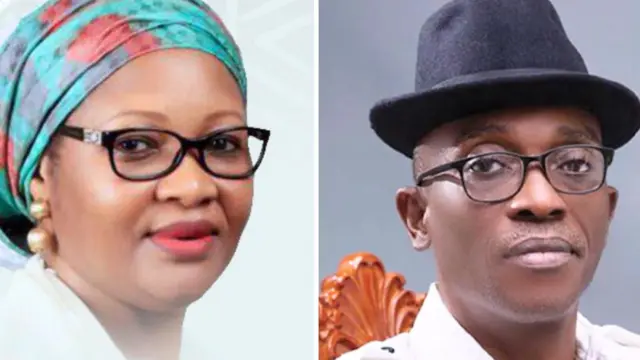
The National Executive Council of Nigeria’s Labour Party has moved to end months of internal turmoil by removing the caretaker committee headed by Esther Nenadi Usman and throwing its full weight behind National Chairman Julius Abure.
The decision emerged from a virtual NEC meeting held on Tuesday, March 17, 2026, amid escalating factional disputes within the opposition party ahead of the 2027 general elections.
NEC Forum Secretary Alhaji Abdulrahim Chindo announced the resolutions in a statement released in Abuja following the concluded session.
The council determined that the Nenadi Usman-led caretaker arrangement had inflicted significant damage on the Labour Party since its controversial establishment.
NEC members characterized the committee’s formation as illegal and concluded that its activities warranted immediate termination.
The virtual gathering drew participation from state chairmen and secretaries elected on December 6, 2025, alongside other senior party figures.
Tuesday’s meeting reaffirmed the legitimacy of the National Working Committee under Barrister Julius Abure, who was elected during the party’s National Convention on March 27, 2024.
The council noted that Abure’s leadership had previously received validation during a November 28, 2025 NEC session that was monitored by the Independent National Electoral Commission.
This endorsement strengthens Abure’s position as the recognized leader of the Labour Party despite ongoing legal battles over the party’s control.
NEC directed Abure and National Secretary Umar Ibrahim to vigorously pursue an appeal currently before Nigeria’s Court of Appeal.
The appeal seeks to overturn a ruling delivered by Justice Peter Lifu on January 21, 2026, which created legal complications for the Abure-led faction.
Once the Federal High Court judgment is set aside, the council authorized Abure and Ibrahim to formally notify INEC about conducting primaries for the 2027 general elections according to the commission’s official timetable.
In a significant move, the NEC invalidated all correspondence previously sent to INEC by the dissolved caretaker committee.
This nullification aims to prevent any actions initiated by the Usman faction from affecting the party’s electoral preparations or official standing with Nigeria’s electoral body.
The decision effectively erases the caretaker committee’s administrative footprint within Labour Party structures.
The meeting was reportedly triggered by a Tribune newspaper publication on March 6, 2026, which called for both virtual and physical NEC sessions to address the party’s leadership crisis.
Nigeria’s Labour Party has experienced persistent internal conflicts following the 2023 presidential election, where the party’s candidate Peter Obi emerged as a major political force.
The latest developments signal continued instability within the opposition party as Nigeria approaches another critical election cycle in 2027.
Political analysts suggest the factional disputes could undermine the Labour Party’s ability to consolidate its gains from the previous election and mount an effective challenge to established parties.