Former President Goodluck Jonathan has urged Nigeria’s political leaders to recommit themselves to nation-building, warning that the country must not betray the ideals and sacrifices of its founding nationalists.
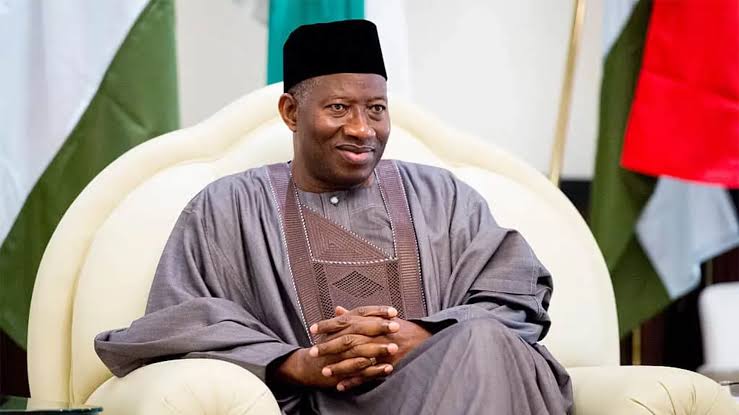
Jonathan made the appeal on Saturday, November 14, 2026, while delivering an address at a colloquium organised to commemorate the 162nd birth anniversary of Nigerian nationalist Herbert Macaulay.
The event, held at the Nigerian Institute of International Affairs (NIIA) in Lagos, brought attention to the country’s political history and the responsibilities of present and future generations in building a prosperous nation.
Jonathan, who chaired the occasion, challenged political leaders and citizens to examine whether Nigeria had achieved the aspirations that inspired its independence struggle.
He questioned whether nationalists such as Herbert Macaulay, Nnamdi Azikiwe, Obafemi Awolowo and Ahmadu Bello would be satisfied with the country’s present condition after sacrificing so much for self-government.
Independence must translate into national development
Speaking on the theme, “Nationalism and Nation Building,” the former president explained that Nigeria’s founding nationalists wanted more than the transfer of political authority from colonial administrators to indigenous leaders.
According to him, their vision was a united and sovereign country where citizens would enjoy equal opportunities, quality education, accessible healthcare, economic prosperity and accountable leadership.
Jonathan maintained that celebrating the country’s historical figures through anniversaries and monuments would have little meaning if their fundamental aspirations remained unfulfilled.
He urged the present generation to honour the independence struggle by building institutions and creating opportunities that improve the lives of ordinary Nigerians.
The former president also warned against allowing the country’s current difficulties to become a permanent inheritance for future generations.
Jonathan identifies leadership failures and institutional weaknesses
Jonathan expressed concern that 66 years after independence, Nigeria had yet to make sufficient progress towards several of the development objectives envisioned by its founding nationalists.
Although acknowledging achievements recorded in different sectors, he said patriotism required an honest assessment of the country’s persistent challenges.
He identified leadership failures, corruption, weak institutions, inconsistent government policies, inadequate infrastructure, insecurity and excessive dependence on raw material exports as obstacles to national development.
He argued that Nigeria’s abundant natural and human resources should have translated into stronger economic performance and improved living standards.
Drawing comparisons with South Korea, India and Singapore, Jonathan urged Nigeria to learn from countries that had made significant progress in industrialisation, education, technological innovation and healthcare.
He stressed that political independence was only the beginning of a much larger responsibility to build a stable, productive and prosperous country.
Former president sets sights on Nigeria’s 2060 centenary
Looking towards Nigeria’s 100th independence anniversary in 2060, Jonathan challenged the present generation to begin defining the kind of country it intends to leave for future generations.
He said the next 34 years should be used to establish measurable national development targets, strengthen public institutions and build an economy capable of providing meaningful opportunities for young people.
The former president also called for renewed commitment to Pan-Africanism, arguing that political freedom must be supported by economic independence, technological advancement, educational development and stronger cooperation among African countries.
He particularly encouraged young Nigerians to take responsibility for advancing the ideals of the nationalist movement through innovation, entrepreneurship, civic participation and responsible citizenship.
Jonathan outlines four priorities for national transformation
The former president identified four major areas requiring urgent attention if Nigeria is to achieve sustainable development.
1\. Democratic and constitutional reforms
Jonathan advocated reforms that would strengthen citizens’ participation in governance, protect human rights, uphold the rule of law and guarantee judicial independence and accountability.
2\. Merit-based political leadership
He called for improvements in political recruitment, insisting that competence, experience and leadership capacity should take priority over ethnic, religious and regional considerations.
3\. Education, technology and innovation
Jonathan urged Nigeria to develop an education system that prioritises scientific research, technological advancement and knowledge production.
He challenged Nigerian universities to pursue international competitiveness and become centres of innovation rather than institutions that primarily consume knowledge developed elsewhere.
4\. Strong and independent institutions
He emphasised that sustainable development cannot depend solely on the personalities occupying political offices.
According to him, Nigeria needs credible institutions capable of delivering public services, enforcing accountability and maintaining continuity in government policies regardless of changes in leadership.
Jonathan recalls Nigeria’s centenary debate
The former president also reflected on the controversy surrounding Nigeria’s 2014 centenary celebrations, when the country marked 100 years since the 1914 amalgamation of the Northern and Southern Protectorates.
Jonathan recalled supporting the commemoration despite criticism from those who questioned whether Nigeria had achieved enough development to justify celebrating a century of existence.
He explained that remembering history should not simply be about celebrating past events but should also provide an opportunity to assess national progress and identify lessons for the future.
He urged the organisers of the Herbert Macaulay colloquium to move beyond historical discussions and produce practical recommendations that could guide Nigeria towards its 2060 independence centenary.
The former president maintained that the responsibility of building a country that reflects the dreams of its founding nationalists rests with today’s political leaders, institutions and citizens.