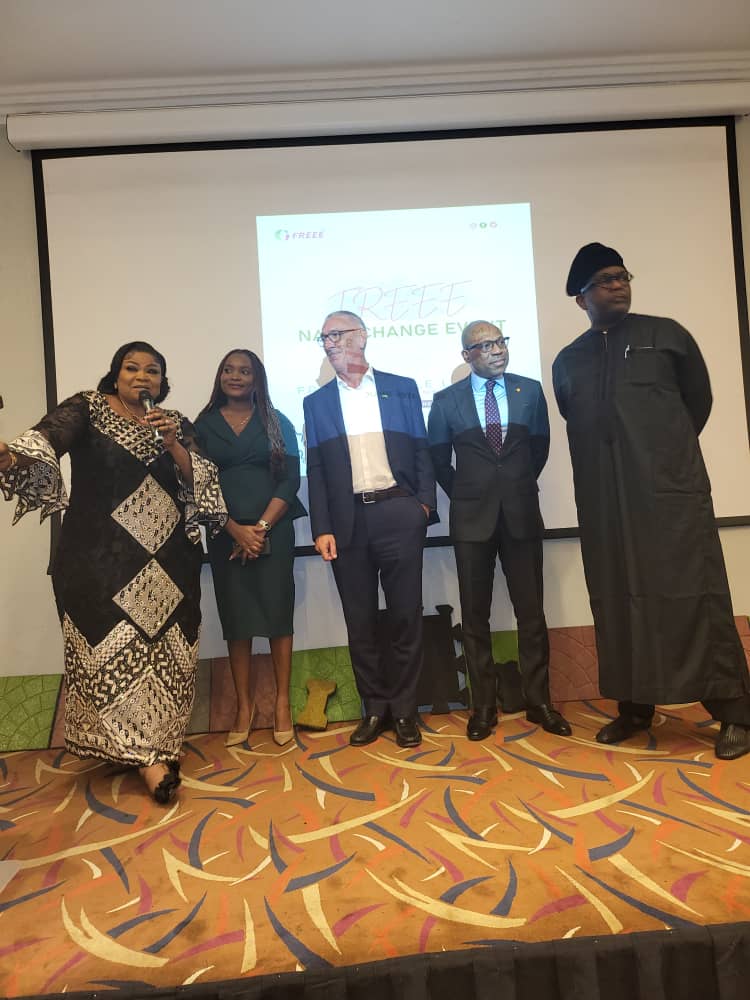
As part of efforts to meet up with global markets and Africa, the management of Freee Town Recycling Limited has changed name to Freee Recycle Limited.
The Managing Director of the Recycling Company, Mrs. Ifedolapo Runsewe, disclosed this in Lagos on Thursday during the change of name and rebranding of their company.
She said they changed their name and rebranded their identity to expand beyond the shores of Nigeria and have a global acceptability.
The company was incorporated in 2018 and she said: “We don’t want to remain a Nigerian brand alone, but want other people from African countries and Asia, Europe, America and other parts of the world to know that something good from recycling could come out from Nigeria. That is the essence of the rebranding and change of name.
“We are making it public for everyone to know that we now have a new name and identity. We have plans to expand it to other African countries, Europe and America. But in the area of recycling, Nigeria has a long way to go in adopting better way, disposing methods. People are begging to open up and embrace recycling. Recycling is still at infant stage in Nigeria and people are coming into it and they are doing good.
“People need to come and partner with us. There is so much wealth to generate and much to be accomplished with waste products. And currently in the area of sustainable development goals as today as from clime action, we are providing employment, Innovation, Gender equality, decent work and economic growth and reduced inequality among other things.
“As an individual, we have to dispose our waste properly and to see in Lagos where waste would be disposed properly, where nylon goes to the right place, bottle, plastic and food waste goes to rightful places but I know we still have a long way to implement it but it is a step in the right direction if taken into consideration. And as a producer, we must have end cycle of what we manufacture”.
“We intend to set up more crushing sites and bottles recycling, waste recycling and most especially electronics recycling sites.”
Mr. Temitope Runsewe, the Non Executive Director, also said what they are doing is succession and expansion plans.
“The company doesn’t want to remain in Ibadan, we want to scale up to other states and some other parts of African countries.
“We are recycling tyres into eco-friendly products such as tiles with different products. We have in Lagos and we replicate it in other places. The company has about 150 staff in Ibadan and we want to expand to other states in African countries and Europe.
“What makes our products unique is that most people think that being environmental friendly and being economic viable, we want to make the environment better, create value, employment. So, we are creating employment and creating wealth, because through the value chain of those who bring the tyres, they are, one way or the other, making a living for themselves and their family members. We have a lot of companies we support like those which bring tyres to us.
“There is a lot of value chain we are supporting and we also pay tax. I also want to appeal to government at all levels because they are supportive in many ways and I hope they are going to do more in supporting us to grow bigger.”
The guest speaker at the event, Mr Jean Marc, said Eight Hundred and Thirty Thousand tonnes of plastic waste are coming out of Lagos State every day.
The changing of name and rebranding of the company came at the appropriate time, because through it, it brings out more possibilities. What the change of name means is that people will now see that there is much to do with recycling in the country.
“Most of the plastic that are useful to us are now being washed into the ocean on daily basis and if we want to tackle that, we need everybody. If we don’t bring people together to bring those plastic together for recycling, we are going to have environmental problems. People don’t care about the piling up of the plastic as minor, but it is a big revenue drive. We could have five to eight different plastic and some of them have existing value attached to them, while some have more value chain of recycling.
“While quite a number of them are not useful, most of the plastics are now billions in China. If will have the ability to source and maximise the value there is much we are going to make from it. I have always asked people from these part of the world most especially the businessmen and academia what it means for them to recycle waste to wealth”.