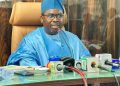
The Monetary Policy Committee (MPC) has slashed the Cash Reserve Requirement (CRR) from 25 to 20 per cent and the Monetary Policy Rate from 13 to 11 per cent.
The Governor, Central Bank of Nigeria (CBN), Mr Godwin Emefiele, told newsmen on Tuesday in Abuja that the cut was part of efforts by the Federal Government to improve the country’s economy.
Emefiele, who spoke on the outcome of the committee’s meeting, said the cut would also ensure that more funds were released to Deposit Money Banks (DMBs) to boost lending to Agriculture and Solid Minerals sector.
According to him, this will improve their productivity and provide added avenues of job creation.
“The MPC, by a vote of eight out of 10 reduced the MPR from 13 per cent to 11 per cent, while two members voted for retention of the rate at 13.0 per cent.
“Seven members voted to reduce the Cash Reserve Requirement (CRR) from 25 per cent to 20 per cent, while three members voted to hold.
“In addition, eight members voted for an asymmetric corridor of +200 per cent to 700 per cent, while two voted to retain the symmetric corridor of +/-200 per cent around the Monetary Policy Rate,’’ he said.
Emefiele said the committee came to the decision in consideration of the weakening economy, particularly the low output growth, rising unemployment and the uncertainty of the global economic environment.
“The committee underscored the need for banks to ensure that measures taken to stimulate the economy translate into increased lending to the sectors with sufficient employment capabilities and the potential to generate growth.
“ Accordingly, the MPC agreed that going forward, any attempt by the CBN at easing liquidity into the system shall be directed at targeting the real sector, infrastructure, agriculture and solid minerals.
“The MPC further directed all banks’ managements to put in place necessary regulations to ensure strict compliance by the DMBs.
“This is to ensure that employment and productivity is stimulated, while also moderating prices,’’ he said.
Emefiele said that the committee was satisfied with the stability, soundness and resilience of the banking system even against adverse global financial conditions.
He said the committee advised market institutions to employ more stringent criteria in evaluating their portfolio and business decisions.
Emefiele said the committee was also satisfied with the Naira at the inter-bank segment which had been relatively stable in the last two months, selling at N196.9 to N197 to a dollar.
He said the Bureau de Change segment was also stable and that the Naira was selling at an average of N205 to a dollar.
Emefiele said due to various policy measures, the Gross Official Reserves increased from 29.85 billion dollars at the end of Sept. to 30.31 billion dollars at November 20.
Meanwhile, some financial experts, on Tuesday, said the cut in the Monetary Policy Rate (MPR) to 11 per cent, if properly harnessed, would boost activities at the Nigerian capital market.
They said in Lagos that the slash would enhance market activities with investors’ sourcing for other investment windows.
Mr Okechukwu Unegbu, a former President, Chartered Institute of Bankers of Nigeria (CIBN), said that the reduction in interest rate would boost local production as the cost of borrowing would be cheaper.
Unegbu said that it would also discourage savings and urged capital market regulators to use the opportunity to strategise on ways to boost domestic investor confidence back to the market.
“The slash would have helped the market, but the market has been on decline since last week due to loss of confidence,’’ Unegbu said.
He said regulators should work to bring confidence back to the market, because many people would seek alternative investment channels with the MPR slash.
Unegbu, who commended the committee’s decision, called on the apex bank to ensure that banks lend to the real sector at the appropriate rate to boost employment.
He said that the nation’s unemployment rate would reduce drastically if banks lend to the manufacturing sector at the stipulated rate.
Unegbu said that reduction in CRR would also ease the current liquidity freeze in the banking industry.
Malam Garba Kurfi, the Managing Director, APT Securities and Funds Ltd., said that the slash in interest rate would discourage people from savings, noting that people would rather invest in the capital market for higher return.
Kurfi said that activities in the nation’s bourse would likely rise with the reduction in MPR.
He said that the MPR margin to the nation’s inflation rate at 9.5 per cent would likely discourage people from saving, because of lower returns.
“We expect some trickling effect of all these in the market, because investors will look for other investment areas with higher returns,’’ Kurfi said.
According to him, the reduction will stimulate business rather than currency devaluation.