


The Federal Government has suspended plans to review broadcast licence fees indefinitely following concerns from industry operators over rising operating costs and the financial pressures confronting radio and television stations across Nigeria.
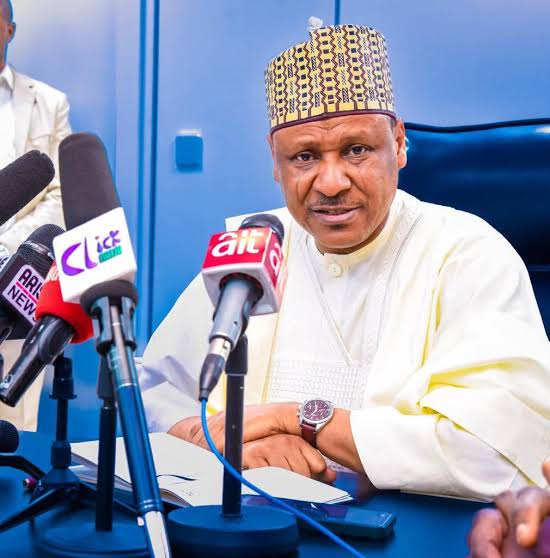
Minister of Information and National Orientation, Mohammed Idris, announced the decision on Monday, November 9, 2026, during a meeting with the leadership of the Broadcasting Organisations of Nigeria (BON) in Abuja.
The directive places any proposed increase in broadcasting licence charges on hold and requires the National Broadcasting Commission (NBC) to comply pending further government consideration of the matter.
The intervention follows renewed concerns from broadcasters about the cost of running stations, access to affordable financing, regulatory requirements and the availability of broadcasting spectrum.
According to the Federal Ministry of Information and National Orientation, BON Chairman Tony Akiotu led the delegation that met with the minister after the organisation’s 82nd General Assembly in Calabar, Cross River State. Ministry of Information
Licence fee dispute dates back to 2023
The disagreement over broadcast licence charges is not new. In July 2023, the NBC disclosed plans to consider increasing fees payable by radio and television operators.
The proposal attracted opposition from BON, which argued that broadcasters were already struggling with difficult economic conditions. The then NBC Director-General, Balarabe Ilelah, subsequently defended the existing charges, saying they had remained unchanged for more than 20 years.
The latest government intervention therefore represents a significant development in a dispute that has persisted for several years. Punch Newspapers
An NBC service document published in March 2026 also provides a useful indication of the regulatory framework. It lists different charges for broadcast licences, including commercial radio, television, campus radio, community radio and internet broadcasting. The document states that the fees are subject to periodic review by the commission.
However, the minister’s latest announcement does not abolish existing licence charges. It suspends further reviews and proposed increases until another decision is taken.
NBC ordered to accelerate Broadcasting Code review
Beyond the licence fee dispute, Idris has directed the NBC to accelerate the review of the National Broadcasting Code.
The review is expected to address developments in the broadcasting sector and ensure that the regulatory framework responds to changing industry realities.
The directive is significant because BON has identified the Broadcasting Code as one of the issues requiring urgent attention, alongside operating costs, licence charges and spectrum allocation.
The minister also promised to convene a meeting involving relevant stakeholders to address outstanding concerns surrounding Nigeria’s Digital Switch-Over (DSO) programme.
BON had previously commended his intervention ahead of the June 2026 DSO launch, saying consultations helped resolve disagreements among stakeholders and address concerns about creating a level playing field for operators. Ministry of Information
Government promises action on advertising payments and financing
The Federal Government has also pledged to address concerns about delayed payments for advertising services.
Idris disclosed that he had directed the Advertising Regulatory Council of Nigeria (ARCON) to ensure the implementation of the 45-day payment policy.
The minister further promised to engage relevant stakeholders on the availability of affordable financing for broadcasting organisations and concerns surrounding spectrum allocation.
These issues are particularly important to operators seeking to maintain broadcasting services while managing the rising cost of electricity, equipment, technology and other operational expenses.
However, the minister did not announce a specific financing package or new spectrum allocation arrangement at the meeting. Ministry of Information
BON seeks relief for struggling broadcasters
Earlier, BON Chairman Tony Akiotu appealed for continued government intervention to address the financial and regulatory challenges facing broadcasting organisations.
He stressed the importance of dialogue and consultation between operators and regulators, warning against developments that could undermine industrial harmony in the sector.
The association’s concerns also extend to the affordability of financing, the review of broadcasting regulations and the need for a more predictable operating environment.
The suspension of licence fee reviews is therefore an immediate regulatory relief for operators, although other challenges raised by the association remain subject to further government engagement.
2027 elections put broadcasters under scrutiny
While announcing the economic and regulatory measures, Idris also reminded broadcasting organisations of their responsibilities ahead of the 2027 general elections.
He urged radio and television stations to maintain accuracy, fairness, professionalism and responsible journalism in their coverage of political developments.
The minister maintained that freedom of expression must be accompanied by adherence to professional standards and ethical responsibilities.
His comments underscore the importance of broadcasting organisations in providing credible information, strengthening democratic participation and promoting peaceful coexistence during the approaching election period. Ministry of Information
What the suspension means for Nigeria’s broadcasting industry
The government’s decision offers temporary relief to broadcasters facing uncertainty over possible increases in licence charges.
However, the longer-term impact will depend on whether the suspension is accompanied by concrete measures to address the industry’s wider financial and regulatory challenges.
For now, the NBC is expected to comply with the directive, while discussions continue over the Broadcasting Code, digital broadcasting transition, advertising payments, financing and spectrum allocation.
The government has not announced a date for lifting the suspension or provided a timetable for a fresh review of broadcast licence fees.
The development leaves broadcasters with an immediate reprieve but also places renewed attention on the government’s ability to translate its promises into sustainable reforms for Nigeria’s broadcasting industry.