On Tuesday, August 11, 2026 – second Nkwo market day in August – all roads from far and near will lead to Obohia, a bucolic agrarian community in Ahiazu-Mbaise local government area, Imo State, for their transcendental cultural fiesta – Eyirieyi Obohia, an age-long festival that unites the community as a people of common heritage.
One of the unique characteristics of this cultural extravaganza is the permanence in date, which leaves no one in doubt. The name Eyirieyi (ihe eyiri eyi), literally means a festival that had been agreed upon with a fixed date.
It is not certain why the community’s forebears chose the second Nkwo market day in August for the festival. But the traditional Igbo week consists of four sacred market days – Eke, Orie, Afo, Nkwo – and most traditional Igbo communities name their central market squares after one of these four days – hence Nkwo Obohia.
So, Eyirieyi, the cultural lodestar of Obohia people is held annually at Nkwo Obohia. It is a period of homecoming for many indigenes at home and abroad and many living in Europe, America and even Asia are already on their way home.
Anthropologist Edward Tylor famously described culture as “that complex whole that includes knowledge, belief, art, morals, law, customs, and any other capabilities and habit acquired by man as a member of society.” In other words, culture is a way of life. But for Obohia people, Eyirieyi, a festival of peace, is not only a way of life, it defines them. It is the essence of their being. Its transcendental values elevate the community, hence the general greeting during the season – udo Eyirieyi diri anyi nile – may the peace of Eyirieyi be upon us.
In the days preceding the festival, people are obliged to settle disputes as a gesture of spiritual purification in order to be considered worthy of partaking in the festivities. Those who do otherwise attract the wrath of the gods for flouting the inviolable obligations which the sacred period imposes on all. Elders lead the community in prayers and thanksgiving, thus ushering in a new season of renewal imbued with faith that accentuates the hope for ancestral blessings.
In essence, Eyirieyi Obohia is a sacred heritage, an affirmation of the people’s brotherhood. Even in its modern manifestation, nothing has changed fundamentally as it is still a period of camaraderie when all indigenes – men and women, young and old – rededicate themselves to the values that promote conviviality and eschew bitterness.
The most enduring legacy of Eyirieyi, which continues to unite the community as a people of common heritage, is its uncommon resilience in the face of corrosive Western values. Instead of being swept away, it has adapted without losing its essence. Not even the 30-month brutal civil war that left Igboland devastated and the people’s values unmoored could upend this culture. Instead, at the end of the war in 1970, Eyirieyi became the people’s anchor in their journey of self-rediscovery.
And two things helped. First was the formation of the elitist Obohia Development Front (ODF) by the community’s middle-class. ODF which played a dominant role in the social regeneration of the community nudged one of their own, Sir Amam Alban Acholonu, to embark on the first published research on Eyirieyi Obohia, a task he accomplished in 1974. The second major development of this era was the audacious entry of Monsignor Donald Okoro, Obohia’s first Catholic priest, into the cultural arena. The priest on returning from the U.S. in the early 1980s blunted the rather sharp edges of criticism of Eyiriryi as a pagan festival by baptising, in the Christian tradition, the preeminent culture.
Obohia is a predominantly Catholic community with over 80% of its Christian population professing Catholicism. An enculturated priest, who had acquired the norms of his people’s culture, playing an activist role, led the charge for the Christianisation of Eyirieyi. Thus, every Eyirieyi ceremony would start with a concelebrated Mass at the St. Peter’s Catholic Church. Not only that, he led his Amaiyi village in the popular Ekpe dance. And since, to borrow a cliché, no one can be more Catholic than the Pope and by extrapolation, no one can be more Catholic than his priest, most indigenes whose faith in their culture was waning came to the understanding that there was no contradiction, after all.
But the most significant transformation came about in 2020 when Obohia youths – vibrant, progressive culture aficionados – stepped up to the plate by taking ownership of the festival with the establishment of Eyirieyi Obohia Council and leveraging technology to export Eyirieyi to the international community. They have also modernised the festival by introducing new concepts. From a one-day affair, Eyirieyi has become a weeklong celebration of culture.
This year’s festival which officially commenced on Monday, July 12 with the bringing down of the traditional musical instruments used for the Ekpe dance at Elekeneowasi is following in the same tradition.
On August 5, there will be a football match between youths (aged 18 and below) of Amano and Umuanunu at St. Bede’s Primary School field in Umuihuocha. On August 6, women will participate in a cooking competition of Ofe Ugummanu, the festival’s signature soup prepared with cocoyam tendrils which only Obohia women know how to cook. August 7 is the day for the fifth edition of the Eyirieyi lecture to be delivered by Prof Basil Uchegbu, a lecturer at the Alvan Ikoku Federal University of Education, Owerri. The lecture will explore the importance of interpersonal relationships in catalysing communal development. He will be following in the footsteps of other illustrious sons of Obohia, including Prof Emma Ezeji Chigbu, who delivered the first lecture and Rev. Fr. Val Chima Anyanwu, who did a yeoman’s job with his 2023 lecture titled, Eyirieyi Obohia Festival: Rekindling and consolidation of the values and spirit of our cultural heritage in the present day society. My 2024 lecture with the theme: Eyirieyi Obohia: the socio-economic potentials of a transformative culture, explored the possibilities of maximising the cultural festival in enhancing the socio-economic wellbeing of the people.
After the lecture, there will be a fashion parade where the youths will adorn and showcase the traditional attires of the people and then the day will be rounded off with a comedy competition. On August 8, there will be a dancing competition involving different women cultural troupes from Obohia and other Mbaise communities. Winners of all these competitions will go home with various cash rewards.
Then, on the eve of Eyirieyi, the youths will embark on a road walk around the community aimed at priming the people for the big day, August 11, which will start with a Mass at St. Peter’s Catholic Church, Amaiyi Obohia at 9am. Immediately after, there will be the initial beating of the Ekpe at Nkwo Obohia before the people will go home to entertain their visitors. At the same time, the Eyirieyi Kitchen will open at the central market square where those who have no relations to visit will have the opportunity of savouring the same special delicacies, especially Ugummanu soup.
At 2pm, all the activities will shift to the Nkwo Obohia market square for the traditional Ekpe and special masquerade –Ubu – dances in a colourful ceremony. While all males – young and old – dressed in traditional attires, participate in the Ekpe dance, each village presents its own Ubu in the dance which is always a spectacle.
The chairman of the 2026 local organising committee, Sir Ben Adim, has promised a spectacular festival that will rival any other cultural festival anywhere in the world, even as he emphasised that Eyirieyi is not just an annual celebration, but the strongest symbol of unity among the four autonomous communities – Amano, Elekenowasi, Umuihuocha and Umuedo – that presently make up Obohia because it serves as a platform for reconciliation, cultural revival and community development.
But beyond the cultural significance of Eyirieyi Obohia, there is also the issue of its huge tourism potentials. And this is where governments at both local and state levels and the private sector come in. There must be a synergy to ensure that the cultural festival which showcases the heritage of Obohia people, equally becomes a tool to attract investments that will ultimately boost local economy.
Sociologists agree that cultural festivals are a fun way to bring people together, attract tourists and celebrate something special. They also provide an opportunity to promote local businesses and act as catalysts for sustainable development. Eyirieyi is no exception. Properly harnessed, the cultural festival which showcases the customs and art forms of Obohia – things that make the people unique – has the potential of attracting tourists seeking authentic experiences and a deeper understanding of the local culture.
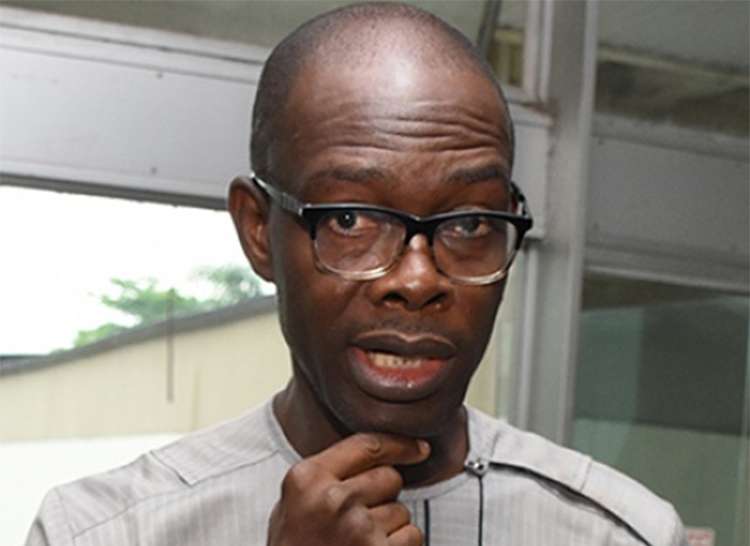
*Ikechukwu Amaechi, FNGE is a Lagos-based journalist and member League of Nigerian Columnists.