President Muhammadu Buhari, on Monday, expressed dismay that Nigeria’s “infrastructure went to rot completely between 1999 and 2014” in spite of the huge resources at the disposal of the country at the time.
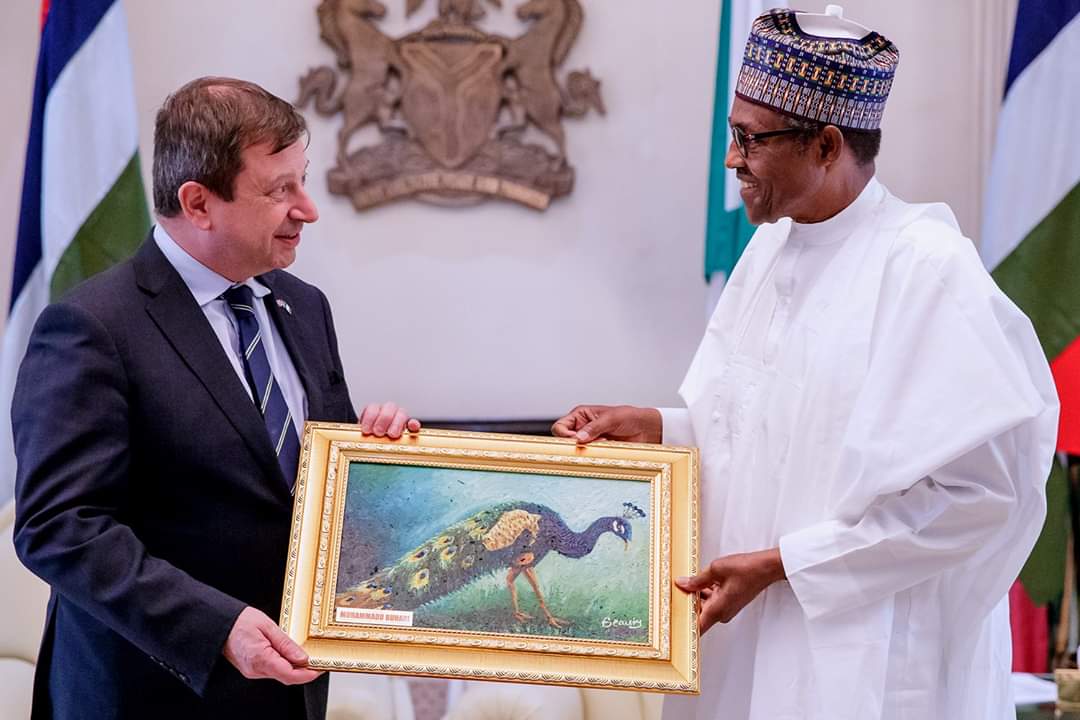
Buhari stated this when he received the outgoing British High Commissioner to Nigeria, Paul Arkwright, in a farewell audience at the State House, Abuja.
He maintained that his administration was doing a lot more in the area of infrastructural development across the country with insufficient resources at its disposal.
“Our focus now is on infrastructure – roads, railway, power, and others. How I wish we had fixed all those when we had money.
“What we earned between 1999 and 2014 is on record, but nothing was done to infrastructure. Now, we are doing a lot more, with a lot less resources. And we shall continue to do our best,’’ he said.
He commended the outgoing High Commissioner for his warm and pleasant disposition, saying that it had seen him traverse almost the entire country.
“I always see you all over the place,” the President noted.
Arkwright, who spent more than three years in Nigeria, said he visited 30 of the 36 states of the federation, and found the people quite enterprising and engaging.
According to him, the British government will be glad to offer a helping hand as required in any part of the country.
He expressed gratitude to Buhari for his support, saying that the relations between the two countries had improved tremendously over the past three years.
Meanwhile, Buhari also declared that Nigeria has left that era in which democratic norms are brazenly subverted, with votes awarded to those favoured by the authorities, and the shortchanged told to go to court for redress.
The President stated this on Monday when he received members of the Joint United Nations, African Union and ECOWAS Good Offices Mission on Elections, at the State House, Abuja.
“I am highly qualified to talk on this, having ended in Supreme Court three times, after participating in elections with disputed results.
“Where will a man looking for where his next meal would come from, have money to hire lawyers, particularly senior advocates?” the President said.
He reassured that the 2019 polls would be free and fair.
Buhari added: “The President has only one vote, governors have a vote each, just like anybody else.
“Let the people vote for whoever they choose, without their will being tampered with.’’
According to him, multi-party democracy gives lots of choice to the people, and Nigeria has a vibrant young population, who trusted his administration to handle their affairs and resources well.
“A lot depends on leadership,’’ he said.
He thanked the joint team for being in touch with the nation’s institutions, particularly the Independent National Electoral Commission (INEC).
Buhari said the 2015 elections “were run with three campaign objectives; securing the country, reviving the economy, fighting corruption,” and the opposition has not succeeded in faulting us. We are doing our best with the resources available to us”.
President of ECOWAS Commission, Jean-Claude Brou, said the team came on a solidarity visit to Nigeria before the forthcoming elections, as it did with other countries like Senegal, Mali, Gambia, among others which recently held polls.
He appreciated the strong role Nigeria played in the sub-region, while also thanking President Buhari for his strides in the fight against corruption and terrorism.
Dr Mohammed Ibn Chambas, who spoke on behalf of the UN, appreciated what he called “the strong leadership of President Buhari in Nigeria, West Africa, and Africa.”
He said: “You’ve always played politics according to the rules. We will do all that we can to strengthen the institutions.
“We’re convinced that INEC is ready to provide free and fair elections.’’