The outbreak of COVID-19 sent jitters through Nigeria’s prisons, now renamed custodial centres.
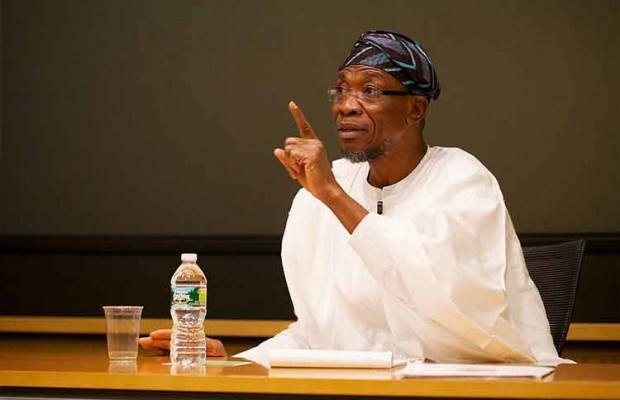
The challenge was how to save the inmates from infection and possible deaths. In this interview, Minister of Interior, RAUF AREGBESOLA, captures a moment in history that led to the boldest decongestion of custodial centres and the highest release of inmates in one year. Excerpts:
What led to the decongestion of custodial centres?
On assumption of office here, long before the pandemic came, I’ve realised that the only way we could manage effectively the Correctional Service and the custodial centres under it was to look at the centres and collaborate effectively to see the decongestion of the inmates there. One, the centres are already congested and majority of those who over- burden the system are the awaiting trial units.
So, I had initiated discussions with strategic stakeholders, from the Presidential Committee to Ministry of Justice to officers of the Correctional facilities and my ministry. So, we have been working all along, what the pandemic did in accelerating the process was to now put an urgency to it, because with the pandemic, it was clear that we could not take any chance, the prayer was not to allow the infection to get into the centres, it will be difficult to manage and for that reason, we were able to get the sympathy, the buy-in, collaboration and the effective support of all stakeholders.
Several meetings were held involving myself, the Minister of Justice and the Chairman of the Prison Decongestion Committee, Justice Bello, the head of the corrections. Everybody worked extra hard, because the process required the head of each of the correctional centres in Nigeria, 244 of them, to do a compilation based on the criteria set of those who qualified for consideration. And we must commend them, we must commend the commitment and zeal with which all those who needed to be part of the process got into it and I’m happy that ultimately, at least for a start, a responsible and reasonable exercise was conducted and the result is out there for everybody to see.
In what ways did your personal humanist convictions influence your disposition to the exercise?
I don’t want to take all the credit. From the strategic stakeholders to the president that approved it, everybody contributed. If you want me to really ascribe credit, the greatest credit should go to the President for agreeing with us to do what we did. Without his consent, what would we have done? Then, we must also recognise the role played by the Attorney-General of the Federation who put everything into it. We had several meetings here till late into the night. Equally, the head of the courts in the Federal Capital Territory, Justice Bello, did considerably well. Particular mention must be made of the Controller-General of the Corrections, Mohammed Ja’afarru, and all his officers who put so much into it, identifying the qualified inmates, collated them and submitted them in time for us to manage the process to fruition.
Yes, you may ascribe whatever you like as to my major stimulation, but my stimulation didn’t matter. The important thing is that we were able to rally all stakeholders to achieve the goal. It is so nice that we could record such a process in Nigeria on the scale that it was delivered. That is my joy.
Are there plans for other phases of this amnesty programme that many will benefit?
It is an on-going process, it is not as if it has ended. If you are observant, you will see that state governments are still very much into it. The criteria that would support and assist sub-nationals to join the effort to decongest the custodial centres have been developed.
On the day, we declared the amnesty for the first batch of inmates, I said more than 75 per cent of the inmates of the Nigerian Correctional Centres are state offenders, not federal offenders. They are because of the circumstances of our history, in custody at the federal centres as the law dictates. They are either state suspects awaiting trial or state convicts. The number of federal offenders is very few. I am happy the states liberally gave us their support and are still carrying on the process of decongestion. That is why the number is not fixed. It keeps on growing,
We are processing another number now, because those we released at the first instance are largely convicts from the state, we have not touched the awaiting trial inmates and in this phase, we are looking at some conditions that will affect those awaiting trial who have stayed for a considerable length of time. We are equally looking at federal offenders who we did not consider in the other one, so the combination of those two categories of inmates in the correctional centres will lead to higher number than the ones we have already set free in the first phase, there will clearly be a second phase. I am already working with the other stakeholders to make this an ongoing process.
Many of the ex-inmates are finding it hard to survive. Is there any hope for employment or empowerment for them?
Of course, hope rises eternally in the hearts of men. It is a need, a consideration that we are working on. But one thing I want to be clear on is that there are challenges. Several of our citizens, who are not ex-inmates, are not employed. They too need empowerment. The Federal Government has just put in place a stimulus package to provide employment and empowerment for the people. It does not discriminate. We want to do this to tackle the impact of the pandemic. Several of them can benefit as well. They must not see themselves as a disadvantaged set. Let them get involved. Let them register for these programmes and vigorously pursue it. They must not allow the factor of being former inmates to affect their zeal to participate in the stimulus package and any other programme that are out to help our people to get into the formal economy and support the nation.
A major challenge of the ex-inmates is stigma. What policies can be put in place to change the negative attitude of the society to them and facilitate their return to the society?
The attitude of individuals will go a long way in defining who they are. My advice to the ex-inmates is that they should shrug off the experience that led them to the jailhouses and use the efforts made to reform them. The correctional centres are no longer penitentiaries, a place where you just keep people without looking at their lives and future. From the first day they get there till when they ultimately get out, either through amnesty, parole or completion of term, their re-integration back into society. This is because we fear what is called recidivism, a process in which an unrehabilitated inmate constantly gets back and returns. We do not want it. It is a pain on the correctional service to have people coming in and out as if it is a fashion. We want them to imbibe the culture of a new individual. My advice to them is that they have a new opportunity to re-mold themselves and take their lives into their hands. Be focused. Be determined. Eschew the bitterness of the past, embrace life and live it productively and well and certainly, it will be well with you.