The Alaafin of Oyo, Oba Lamidi Olayiwola Adeyemi 111, has identified fear of predominance of one ethnic zone over another, over-concentration of powers, non establishment of the principle of public accountability for office holders and inequitable system of revenue allocation as some of the basic problems challenging the country.
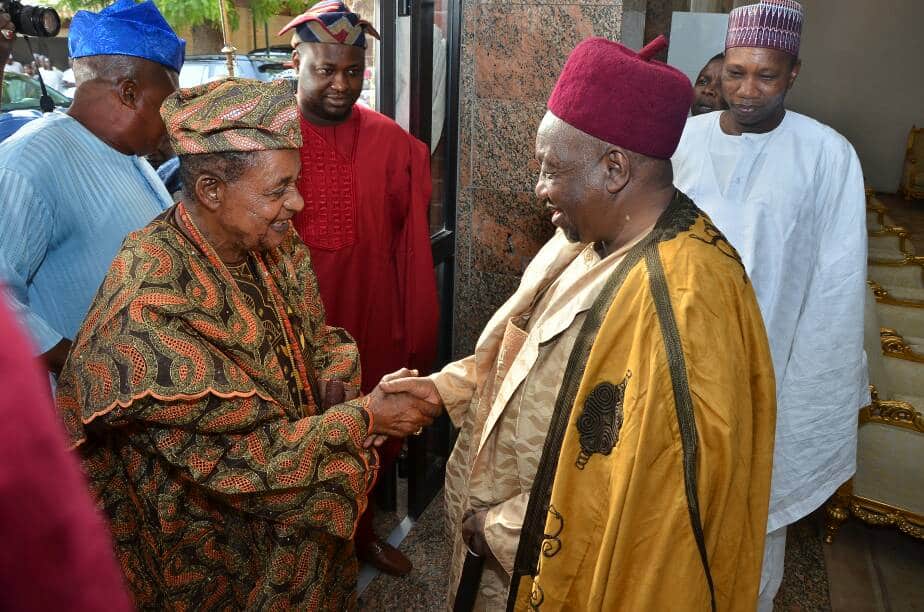
Oba Adeyemi made the observation when he paid a courtesy visit on the Sheu of Bornu, His Royal Highness Abubakar Umar Garbai El-kanemi.
He said these issues are not new but immutably metamorphosed and taken different and violent characters in today’s national live.
‘’The ultimate consequences are that they still pose serious threats to peace and national security. And as constant variables in our national consciousness, there should be genuine and concerted efforts towards addressing these challenges to peace and security. Nigeria’s ethnic, sectional and religious diversities ought to serve as source of national unity, cohesion and integration but unfortunately this has over the years constituted serious threat to peace, security and national development because the elite have always tended to manipulate these identities for their parochial interests’’.
The royal father noted that settlement of inter-personal, inter-ethic and communal disputes or conflicts is a critical area where traditional rulers could be very central in democratic consolidation and sustainability.
This, according to him,’’ is due to the fact that conflict is part and parcel of human coexistence but peaceful resolution of conflict is one of the hallmarks of democracy and development. If we adopt the traditional methods of conflict resolution as alternative to the modern judiciary, it would go a long way in improving our current justice system which has not only been over-stretched but also grossly abused’’.
‘’The position here is that the ruler at the centre of traditional justice system could achieve rapid peaceful resolution of inter-personal and communal disputes which have become clog on the wheel of our progress and development. Traditional rulers have been doing this at the local level but this need to be backed and strengthened by formal governmental authority and recognitions’’.
The paramount ruler pointed out that apart from the advisory role given to the traditional institutions in the current democratic dispensation, traditional rulers should be seen as the coordinator of general community development as he has natural capability to successfully act as adjudicator, mediator, intercessor and facilitator of community projects and programme.
‘’In other words, traditional rulers have been grossly under-utilized given the enormous potentials inherent in their offices, positions and influence. Therefore, they should be accorded a pride of place in our development strategies so that we can fully tap their enormous natural potentials and powers’’.
Responding, the Sheu of Bornu lauded what he referred to as ‘’visionary leadership qualities’ of the Alaafin for his untiring efforts in the areas of national developments, social justice, emancipation of traditional institution and human resources development.
He said both the old Oyo and Borno Empires present pictures of the society where religious and tribal diversities were harmonized to ensure peace, security, and development.
‘’ In both Empires, there were different sub-ethnics and religious groups that co-existed peacefully and where ethnic and religious sentiments were subsumed under societal interests. Nigerians have a duty to work for all that promotes peace and harmonious living. We must be our bothers’ keepers, eschew all acts detrimental to peace, unity and rapid development’’.