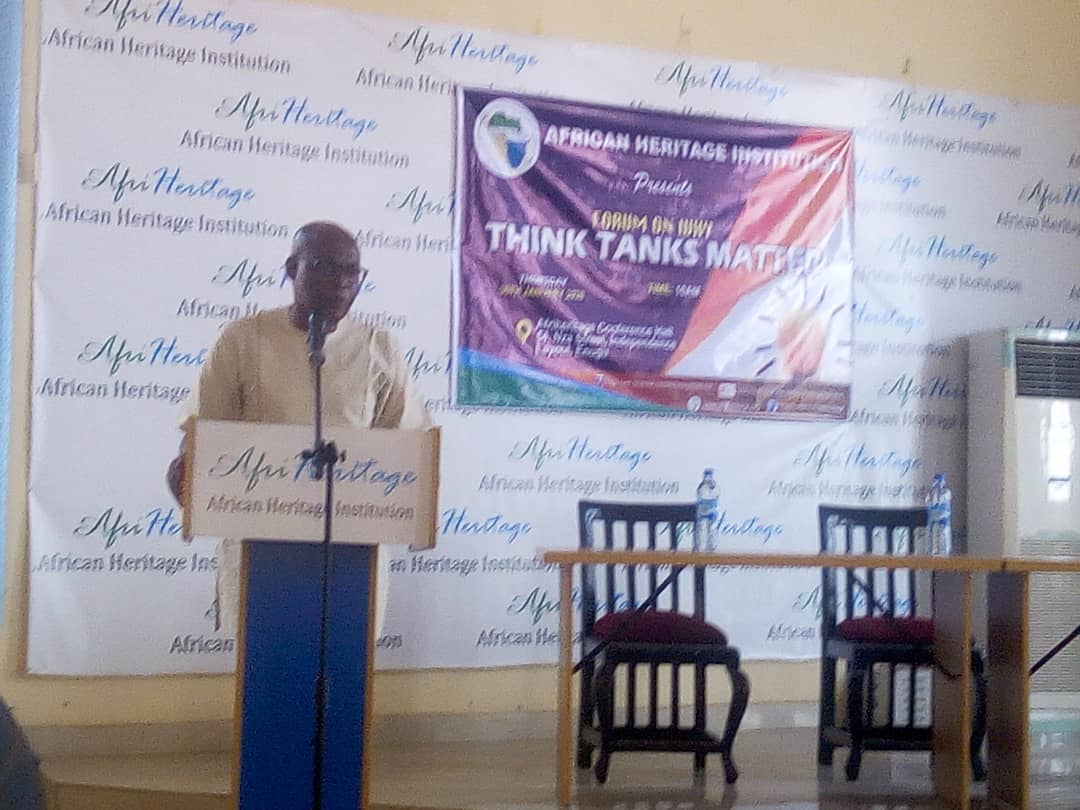
African Heritage Institution, a research Institute based in Enugu has held a One-Day Seminar on” Why Think- Tanks Matter The Future of Think -Tanks and Policy Advice” with a call on government to allow independence of Think-Tanks, adequately fund Think-Tanks to enable them carryout researches on issues affecting the society , accept recommendations of Think-Tanks and implement policies formulated for a better development of the society.
Executive Director of Afriheritage, Professor Ufo Okeke-Uzodike, made the call in his welcome address /Opening remarks at the event.
He observed with dismay that “We are in times that Think – Tanks are still struggling “.
He noted that Think-Tanks are under serious threat, saying that “60 percent of Think-Tanks in Africa are highly vulnerable with risk of disappearing”.
Professor Uzodike explained that Think-Tank is a body of experts who provide advice and ideas on specific political and economic problems. He said that African Heritage Institution has done a lot in the policy formulation in the country, adding that much of what they do have gone more of international.
The Executive director hinted that ” Think-Tanks are cataylists for change They are agenda setting institutions. They drive social change and suggest ways of doing things “. He however lamented that many of the Think- Tanks are struggling because the governments are not ready to support them. “No Think-Tank can survive without funding, ” he said.
Professor Okeke-Uzodike noted that funding, issue of independence and autonomy are crucial. He said that the seminar was apt and it’s about transformative change in Nigeria, Africa and the world.
The panelists Mr Calisttus Ekenze, Dr Okechukwu Chuks-Ronnie, Dr Chibuike Uba in their separate presentations, called on Think-Tanks to stand their feet, knowing that their researches are evidence -based.
Dr Ekenze , former Head of Service in Imo State and fellow, Chartered Institute of Taxation, urged Think-Tanks to come together and articulate a request for legislation and make it mandatory for any government. He called on Think-Tanks to focus on the educational sector, security, the budget system and Faith-based organizations which have serious problem in the society , noting that for them to be successful, ” Think-Tanks should have sufficient resources and persistence to continuously cultivate ideas. ”
In her presentation on development, Dr (Mrs) Olachi Chuks-Ronnie, an Activist, lamented that in Nigeria, “there is death of data, government does not believe in building Think -Tanks.” She urged Think -Tanks to be accountable and transparent in their jobs, noting that that’s the only way they would build trust of the government and their sponsors.
On his part, Dr Chiwuka Uba observed that Think-Tanks are meant to raise issues, attract advocacy, but some of them had turned themselves into consultants. “.Think-tank Tanks these days do not want to confront government.. Think -Tanks should monitor programmes, play advocacy role continuously, be innovative, partner with the media, also focus on local and home issues. ” he said.
Participants who spoke at the event included Dr Maxwell Ngene , lecturer at Renaissance University, Ugboawka, Enugu State. It was generally advocated that Think-Tanks should add value to what they do, collaborate with Civil Societies, the media and get the government to understand what they stand to gain if their recommendations were taken.
.