


Former All Progressives Congress (APC) presidential aspirant, Chief Stanley Osifo, has called on Nigerian security agencies to intensify action against political thuggery, intimidation and the use of dangerous weapons, warning that escalating political hostilities could threaten lives and undermine the country’s 2027 general elections.
Osifo made the appeal in an interview with the News Agency of Nigeria (NAN), following recent political violence in Delta State, where a confrontation during a campaign activity in Ughelli North Local Government Area resulted in multiple fatalities.
He urged politicians to abandon the practice of recruiting or sponsoring violent groups to intimidate opponents, warning that the consequences extend beyond political rivalry to the safety of ordinary citizens and the stability of communities.
The former aspirant particularly called on the Nigeria Police Force and other security agencies to investigate political gangsters, confront inflammatory political rhetoric and prevent the open display of weapons during political gatherings.
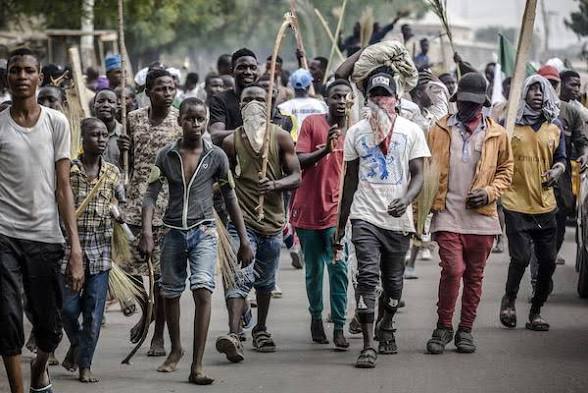
He expressed concern about videos circulating on social media which, according to him, show supporters of political parties carrying machetes, cutlasses, sticks and other potentially dangerous objects during political activities.
Osifo maintained that political competition should be conducted through peaceful engagement, persuasion and respect for opposing views rather than intimidation and physical confrontation.
Deadly Delta campaign attack raises fresh security concerns
Osifo’s intervention comes against the backdrop of the November 23 violence at Uduere community in Ughelli North, Delta State, involving supporters at a political gathering associated with former Deputy Senate President, Senator Ovie Omo-Agege.
Omo-Agege, who is seeking election to represent Delta Central Senatorial District under the Nigeria Democratic Congress (NDC), narrowly escaped the confrontation, which reportedly involved gunfire and left several people dead or injured.
His campaign organisation initially reported that four people, including two campaign aides, were killed. The organisation described the incident as a targeted attack on the former lawmaker and accused armed individuals of attempting to assassinate him.
However, the Nigeria Police Force subsequently disclosed that preliminary investigations indicated six deaths and several injuries, noting that conflicting casualty figures were circulating and that a full investigation would establish the verified number.
The circumstances surrounding the confrontation have also generated competing accounts.
Ughelli North Local Government Chairman, Jaro Egbo, rejected allegations that he organised the attack, claiming that the disagreement originated from a dispute over the use of a community hall. He also alleged that members of Omo-Agege’s entourage opened fire on his supporters, resulting in three deaths.
The allegations against the different parties have not been independently established.
Following the incident, the Inspector-General of Police, Olatunji Rilwan Disu, directed an impartial investigation into the circumstances surrounding the violence, including the deployment and conduct of police personnel at the venue.
The Delta State Government also imposed a dusk-to-dawn curfew across Ughelli North, restricting movement between 6 p.m. and 6 a.m. daily.
In a further development reported on November 29, the Delta State Police Command announced that four suspects had been arrested and 14 other individuals were being sought in connection with the violence.
The police also said Omo-Agege and other persons invited in connection with the investigation had yet to honour the invitations. His media adviser, however, had disputed that the former senator received the invitation, while the police maintained that calls had been made and an official letter sent to his WhatsApp number.
The investigation remains important in establishing individual responsibility and determining the sequence of events.
Political violence spreads anxiety ahead of 2027
The Delta incident is part of wider concerns about the security of political activities as Nigeria approaches another general election.
On November 17, the Coalition Against Electoral Violence in Nigeria raised concerns over reported incidents of intimidation, attacks on political meetings, convoy assaults and the use of dangerous weapons involving supporters of different political parties.
The coalition identified several states, including Delta, Cross River, Ekiti, Kebbi, Enugu, Ebonyi and Oyo, as locations where political confrontations had reportedly occurred.
It called on political parties to take responsibility for their supporters and urged security agencies to investigate and prosecute individuals found responsible for electoral violence, including those who finance or organise violent activities.
The Inspector-General of Police also issued a strong warning at a high-level security meeting with political parties, INEC and other stakeholders on November 25.
Disu maintained that the police would remain politically neutral and that no individual would be shielded from prosecution because of political office, party affiliation or influence.
INEC Chairman, Prof. Joash Amupitan, similarly warned that violence could compromise the electoral process before election day by discouraging candidates, supporters and ordinary citizens from freely participating in political activities.
He urged political leaders to focus on presenting their programmes and convincing voters rather than creating an atmosphere of fear.
Political thuggery in Nigeria: A problem rooted in the country’s democratic history
Political violence is not a new development in Nigeria’s democratic experience.
Since the restoration of civilian government in 1999, elections have periodically been accompanied by political intimidation, attacks on opponents, recruitment of criminal gangs and disputes involving rival political factions.
A major Human Rights Watch investigation published in October 2007, titled Criminal Politics: Violence, Godfathers and Corruption in Nigeria, documented how some politicians and influential political sponsors recruited and armed criminal gangs and cult groups to intimidate opponents, influence elections and protect political interests.
The investigation, which included interviews with politicians, government officials, gang members, journalists and victims, identified political patronage and the failure to prosecute influential sponsors as important factors sustaining the violence.
It also documented how some gangs initially recruited for electoral activities became independent sources of insecurity, particularly in parts of the Niger Delta.
A separate analysis by the Institute for Security Studies in 2019 examined the economic and institutional dimensions of electoral violence.
The analysis identified the enormous value attached to political office, the control of public resources and the influence of political patronage as factors that increase the stakes of electoral competition.
It argued that where political power is perceived as a gateway to economic advantage and control over public resources, some contestants may resort to intimidation and violence to secure or retain influence.
The politicisation of security institutions and concerns about their neutrality further complicate efforts to prevent political violence.
These historical patterns suggest that addressing political thuggery requires more than periodic appeals for peaceful elections. It demands sustained accountability for those who recruit, finance and deploy violent groups.
Electoral Act 2026 prohibits political thuggery
Nigeria’s Electoral Act 2026 provides a legal framework for addressing political violence and intimidation during election campaigns.
Section 96 prohibits political parties, aspirants and candidates from retaining, organising, training or equipping individuals or groups for the purpose of using physical force or coercion to advance political interests.
The provision also prohibits political parties and candidates from maintaining armed private security organisations or political vanguards for campaign-related activities.
Under the law, candidates or aspirants who contravene the relevant provisions may face a maximum fine of ₦5 million or imprisonment for up to 12 months. Political parties may face a ₦10 million fine for a first offence, with additional penalties for subsequent violations.
Section 97 further prohibits political parties, candidates, aspirants and other individuals from threatening people with force or violence to compel them to support or reject a particular political party or candidate.
The provisions demonstrate that the country already has legal instruments for addressing political intimidation and the organised use of violence in election campaigns.
The major challenge, therefore, is ensuring that the laws are enforced consistently, without discrimination based on political affiliation or the status of those involved.
2027 elections: Time for preventive action
According to the Independent National Electoral Commission’s published election calendar, the presidential and National Assembly elections are scheduled for January 16, 2027, while the governorship and State House of Assembly elections will take place on February 6, 2027.
With the elections approaching, the growing reports of confrontations at political gatherings raise important questions about the preparedness of security agencies to protect candidates, party supporters and the electorate.
Political parties must demonstrate responsibility by publicly discouraging violence, monitoring the conduct of their supporters and refusing to provide financial or organisational backing to violent groups.
Security agencies, on their part, must strengthen intelligence gathering, investigate threats before they escalate, protect political gatherings and ensure that investigations into politically motivated attacks lead to credible prosecutions.
Equally important is the responsibility of young Nigerians, who are frequently exposed to recruitment into political mobilisation structures, to resist being used as instruments of intimidation and violence.
Political leaders must recognise that the pursuit of elective office cannot justify the destruction of lives, property or democratic institutions.
Osifo’s warning adds to the growing calls for restraint ahead of the 2027 elections. Whether these appeals translate into meaningful action will depend on the willingness of political parties and law enforcement institutions to hold perpetrators and their sponsors accountable.
Ultimately, the credibility of Nigeria’s next elections will be measured not only by the conduct of voting and the declaration of results, but also by whether citizens can campaign, associate, express political opinions and exercise their voting rights without fear.