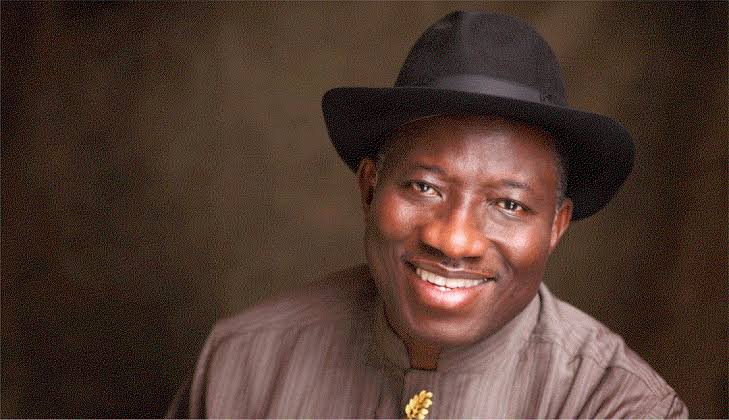
Former Nigerian President Goodluck Jonathan has cautioned political leaders against escalating hostility ahead of the 2027 general elections, warning that Nigeria’s democracy could face serious threats if political parties begin treating one another as enemies rather than legitimate competitors.
Jonathan said political parties must not conduct themselves like rival cult groups, where disagreements are settled through intimidation, violence and attacks on opponents.
He delivered the warning on Tuesday, November 17, 2026, in Abuja, during the third National Peace and Awareness Conference organised by the Goodluck Jonathan Foundation (GJF).
The 2026 conference was held under the theme, “Safeguarding Trust and Strengthening Social Cohesion in a Politically Competitive Environment.”
Speaking at the gathering, the former president expressed concern over increasing political intolerance, electoral violence and the alleged recruitment of young Nigerians as instruments of political intimidation.
He disclosed that Nigerians and international observers had contacted him over concerns about the country’s political atmosphere ahead of the 2027 elections.
According to Jonathan, the growing anxiety surrounding the next electoral cycle should concern everyone committed to Nigeria’s democratic stability.
He warned that political disagreements were increasingly becoming hostile, with some politicians viewing members of opposing parties as enemies who must be defeated through any available means.
Jonathan stressed that such behaviour was incompatible with democratic principles.
“That is not politics. We must not manage our political systems as cult groups,” he cautioned.
Jonathan condemns use of youths for electoral violence
The former president also criticised politicians who allegedly exploit young people to perpetrate thuggery, intimidation and electoral violence.
He maintained that every Nigerian has the constitutional right to seek elective office, from councillorship to the presidency, regardless of political affiliation.
Jonathan urged political actors to respect this right and create an environment where candidates can freely participate in elections without fear of harassment or physical attacks.
He emphasised that democracy should accommodate competition, different political opinions and peaceful disagreement.
Raises concerns over conflicting court judgments
Beyond political intolerance, Jonathan expressed concern about the growing controversy surrounding conflicting judicial decisions in electoral disputes.
He criticised situations where courts of coordinate jurisdiction issue contradictory judgments on similar matters and instances where lower courts appear to interfere with decisions already made by superior courts.
He warned that the practice of seeking favourable courts to determine political disputes could weaken public confidence in Nigeria’s judicial system.
Jonathan called on the National Judicial Council (NJC) to examine the situation and encourage greater consistency in judicial proceedings.
He cautioned that when citizens lose confidence in the courts, they may resort to self-help, with potentially dangerous consequences for national peace and stability.
Jonathan explains democracy using a football analogy
To illustrate the responsibilities of different democratic institutions, Jonathan compared Nigeria’s political system to a football match.
In his analogy, political parties are the competing teams, while the Independent National Electoral Commission (INEC) serves as the referee responsible for ensuring that the rules are followed.
He likened the judiciary to the Video Assistant Referee (VAR), which provides an additional mechanism for reviewing disputed decisions.
Citizens, he explained, are the supporters who must demand fairness and accountability from all participants.
He urged traditional rulers, religious leaders and other influential members of society not to remain silent when political actors engage in practices capable of threatening national stability.
Warns against ethnic and religious divisions
Jonathan also cautioned against the use of ethnicity and religion as instruments of political mobilisation ahead of the 2027 elections.
He described the deliberate promotion of ethnic rivalry as a serious danger to Nigeria’s continued unity.
The former president called for a change in the way political leaders are selected, urging Nigerians to place greater emphasis on competence, national interest and public service rather than ethnic loyalty, religious identity or personal ambition.
He said Nigeria needed leaders capable of bringing people together and advancing national development.