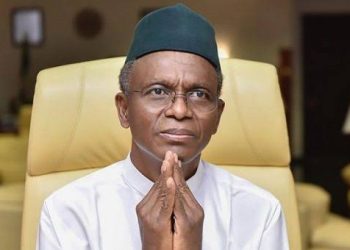
Ministers of the Organisation of Petroleum Exporting Countries (OPEC) gathering in Vienna say they are determined to reach a consensus to cut oil production and prop up global prices.
Qatar’s Minister of Energy and Industry, Dr Mohammed Al-Sada reiterated this at the opening of the 171 meeting of the OPEC Conference on Wednesday.
One of the focus of the meeting is to resolve differences between OPEC’s three biggest producers, Saudi Arabia, Iran and Iraq.
They are presently at loggerheads over how to share the burden of a plan to reduce supply for the first time since 2008.
The aim is presently to get the 14 members of OPEC to cut production to 32.5 million barrels per day from their October level of 33.6 million.
The Ministers are presently in a close door meeting that is scheduled to last till 4 p.m and at the end of the meeting, a press conference will be held to announce key decisions and agreements reached.
Al-Sada, who is also the President of the Conference, said that cooperation between OPEC and non-OPEC members was vital to re-balancing the global oil market and the world economy as a whole.
“From the supply and demand perspective, there are signs that the re-balancing of the fundamentals is underway.
“This year, we expect non-OPEC oil supply to contract by 800,000 barrels a day, compared to growth of 1.5 million barrels a day in 2015.
“And in 2017, we only see a small growth in non-OPEC supply of 200,000 barrels a day.
“In addition, global economic growth forecasts remain reasonable for both 2016 and 2017, at 2.9 per cent and 3.1 per cent respectively.
“Nonetheless, as we have repeated on many occasions throughout the year, the large stock overhang continues to be a major worry,” he said.
Al-Sada said that ways to increase investments in the upstream, midstream and downstream will also be discussed.
“Overall, an estimated oil-related investment requirements are close to 10 trillion dollars in the period to 2040.
“We need to ask ourselves whether the situation that has evolved over the past two years or so is putting this future at risk.
“Global spending on exploration and production investments fell in both 2015 and 2016, and some are now even talking about this continuing.
“A third year of investment falls would be unprecedented for the industry,” he said.
Nigeria’s Minister of State for Petroleum, Mr Emmanuel Kachikwu, expressed optimism that a favourable consensus will be reached after the meeting.
“We’re optimistic. There’s still a few gray areas we have to patch up, but I like to go in believing that we’re going to reach a deal,” he said.
Oil rises on Wednesday ahead of the meeting, with members of the producer cartel trying to thrash out an output cut to curb oversupply.
International Brent sweet crude was trading at $46.85 per barrel .
U.S. West Texas Intermediate (WTI) crude was up at $45.52 a barrel.
Traders said markets were jittery, and that prices could sharply swing either way depending on developments at the Organization of the Petroleum Exporting Countries (OPEC) meeting in Vienna.
Oil dropped nearly four per cent the previous session over disputes between Saudi Arabia, Iran and Iraq regarding details of the planned cut.
Despite the disagreements, most analysts still expect some form of deal.
Iran and Iraq are resisting pressure from Saudi Arabia to curtail production.
Iranian Oil Minister Bijan Zanganeh told reporters upon arrival at OPEC’s headquarters in Vienna that his country was not prepared to reduce output.
“We will leave the level of production (where) we decided in Algeria.”
OPEC, which accounts for a third of global oil production, made a preliminary agreement in Algiers in September to cap output around 32.5-33 million bpd versus the current 33.64 million bpd to prop up prices.
OPEC said it would exempt Iran, Libya and Nigeria from cuts as their output had been crimped by unrest and sanctions.
One of the biggest OPEC concerns is that by cutting output it would simply hand over market share to non-OPEC competition.
There are strong indicators that such concerns are warranted.
U.S. shale drillers have radically slashed production costs in the last few years, to now between $35 and $40 per barrel.