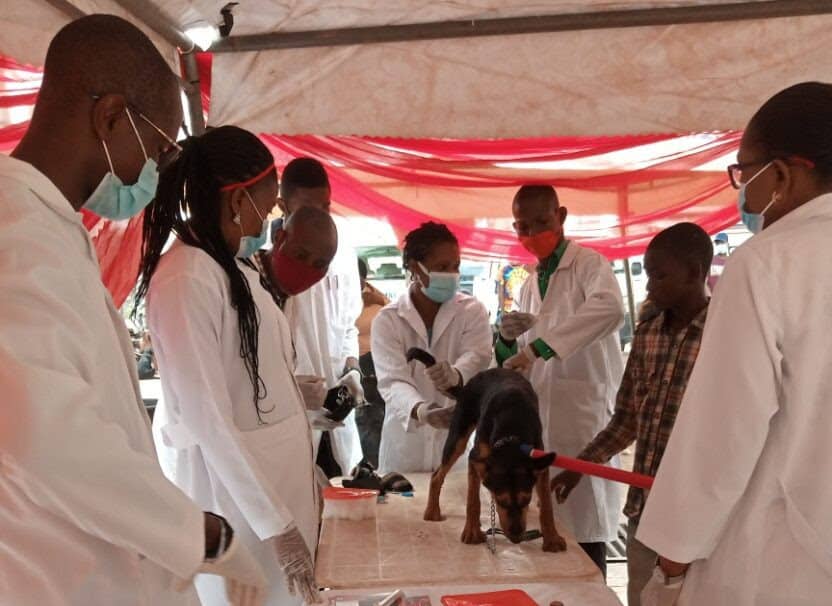
The Federal Government has promised to conduct regular training and retraining
for veterinary doctors to combat emerging zoonotic and trans-boundary animal diseases in the nation.
The Chief Veterinary Officer of Nigeria (CVON), Dr Maimuna Habib, made the promise at the closing of the Cohort Three
In-Service Applied Veterinary Epidemiology Training (ISAVET) on Friday in Jos.
Habib explained that regular training, particularly specialized ones, would strengthen animal disease surveillance
system in the country, hence, making them adequately equipped to tackle emerging threats.
She added that the ISAVET program would create the needed impact toward disease control that would guarantee
security and safety in communities.
She added that “as you all know that 75 per cent of emerging and re-emerging diseases in the human population
are from origin, the ISAVET trainees will serve as frontline officers in early detection and response of diseases before
they spread to the human population.
“You will agree with me that field epidemiology officers are the line of defense against animal diseases, especially
zoonoses; they are involved in all aspects of disease control and the capacity of these officers requires continuous
enhancement, especially now that there are increased cases of emerging and re-emerging infectious diseases.
“ISAVET has also improved the skill and knowledge of veterinarians not only in surveillance but data analysis,
diseases outbreak investigation, risk communication, risk assessment, data audit, and decision-making process.
“It is also noteworthy to mention that the program has also improved animal healthcare service delivery at
the community level, thus contributing to food security and food safety in Nigeria.”
The CVON described the program as “mentorship-driven one that provides opportunities for young veterinarians
to be groomed into leadership positions for the control of animal diseases in Nigeria.
“You may recall that last month during the ISAVET Cohort Two graduation, I shared with you that the Federal Executive
Council (FEC) approved the revised National Animal Health Policy.
“With that, we priorities training and retraining of veterinarians to become frontline actors in tackling emerging and
re-emerging diseases.”
She advised the participants to put the knowledge gained into proper use to meet the current challenges of animal disease
prevention and control in the country.
Prof. Lami Lombin, the National Coordinator of ISAVET, said that the program was a brainchild of the Emergency
Centre for Trans-boundary Disease of the Food and Agriculture Organization (ECTAD-FAO).
She added that the training was structured into a one-month classroom learning and three-month field experience.
She explained that the completion of the third cohort brought the number of ISAVET trainees in the country to 96, stressing that
“today, Nigeria can boast of having a total of 96 trained frontline ISAVET trainees, 54 males and 42 females, with this cohort
having the highest number of female trainees who are 17.
“This feat would not have been complete, but for the unwavering support and commitment of our partners and sponsors;
worthy of note, is the tremendous support given to this program by the office of the CVON and members of the steering committee.”
She expressed the hope that government would take over soon, expand the scope, and domesticate the program in Nigeria
“The future of the veterinary profession rests on our shoulders and together, we will continue to stamp our footprint in the
sands of times,” Lombin told the trainees.