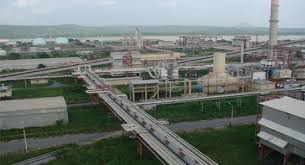
Minister of Solid Minerals Development, Dr Kayode Fayemi, says the Federal Government will not touch the Ajaokuta Steel Company until all legal issues are resolved.
Fayemi made the disclosure at the News Agency of Nigeria (NAN) Forum in Abuja.
He said that there was a pending case between the Federal Government and a foreign investor, called the Global Infrastructure Holdings Limited (GIHL), which claimed that steel plant was concessioned to in 2003.
“For us, Ajaokuta is priority but nobody is going to touch Ajaokuta in the international investment terrain until it become unencumbered.
”Ajaokuta was concessioned off in 2003 by President Obasanjo, in 2008 President Umar Yar’ Adua came and revoked it.
“That revocation did not take into account that the concession had not expired, the Global Infrastructure company took us to Arbitration Court in the United Kingdom.
“Up till last week, the Attorney General and I still met with the mediator who came all the way from London.”
He explained that six countries had approached Nigeria government to revive Ajaokuta within 24 months, adding that the President was interested in partnering with one of the countries.
“The countries gave us guarantee to revive Ajaokuta within 24 months to bring it to operation, but the countries also have steel operations in other parts of the world.
“If we dam the consequences and give Ajaokuta to them, they are going to get a lien against their operations in other parts of the world.
“We have to resolve the legal issue on ground, because Ajaokuta has become a collective shame to Nigerians.’’
Fayemi said that only 18 steel companies were currently operating out of 30 steel companies existing in Nigeria with the production of 2.6 million tonnes of steels annually.
According to him, the quantity of steel Nigeria is producing necessitated the huge importation gap, as the country is consuming six million tonnes annually.
He said the bulk of what the companies produced was from scrap and importation of billet from China.
According to him, the Nigeria Customs Service collects 12 per cent tax from steel importers to discourage importation and to support local industries.
He also disclosed that the Federal Government will open up Nigeria’s abundant coal deposits to investors interested in using it to generate electricity.
“We actually have coal in abundance in Nigeria, and we have decided in this government that we need to take advantage of it to open it up to investors, who are interested and get them to come and site plants near the coal deposits.
“They can then use it to generate the shortfall that we are experiencing in the power supply situation in the country.
“And I believe it is only when we have done that, our people even have electricity that we can start talking about the dangers but I don’t think that should stop us from getting power to the people which is a priority for Nigerians right now.’’
He said the government had identified the places it needed to reclaim as part of efforts to boost mining in the country.
The minister said the brown field project had been reopened and allocated to people who would work in the areas, adding that the tin mines in Plateau had been privatised.
He said the ministry did not have enough money to reclaim all the mining sites in the country.
Fayemi said the N400 million required for the preliminary phase of the work had been captured in the 2016 budget of the Ministry of Power.
According to him, the project cannot be realised without the active involvement of the Ministry of Solid Minerals.
“We are working with the Federal Ministry of Work, Power and Housing on the Okaba mines and the Onyema mines in Enugu with a view to ensuring that we assist in the coal-to-power generating plants project.
“We will site those GENCOs nearer the reserve where they are rather than take them thousands of miles away where you now have to spend money on transmission lines.”
Fayemi said coal was clearly a factor in the energy mix of the country.
He spoke of the need to address the power situation in the country considering the role it plays in driving the economy.