Management Team Addressing the Press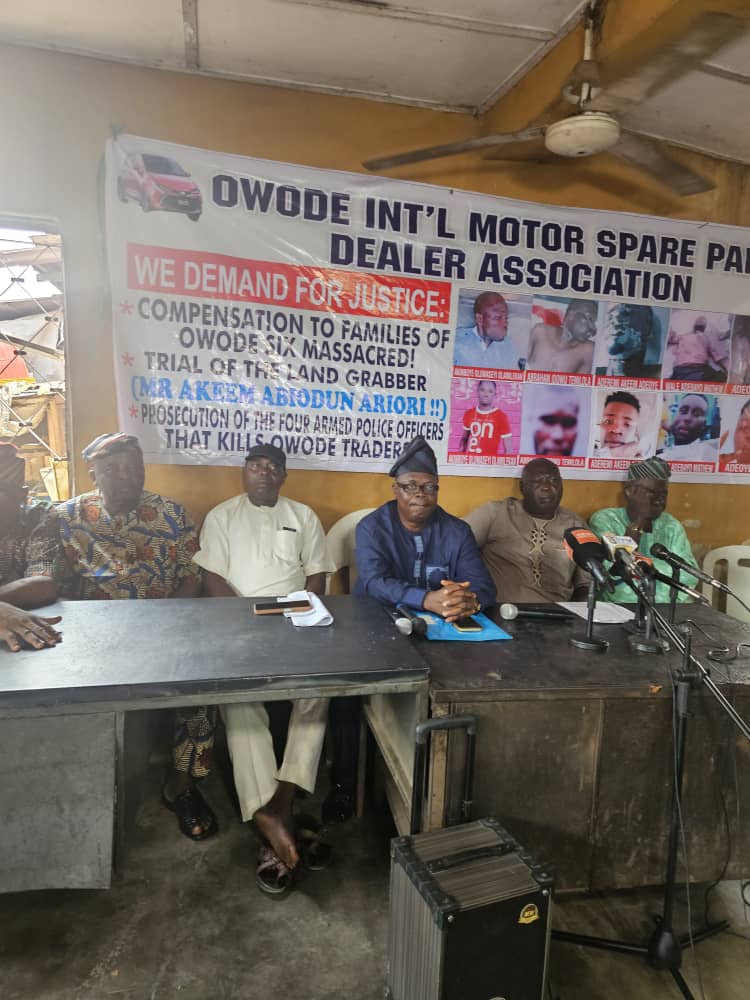
For more than six decades, the Owode-Onirin International Motor Spare Parts Market was more than just a place of business. It was a lifeline.
At sunrise each day, traders rolled open rusted shutters, swept dusty floors, and arranged brake pads, engine belts, and oil filters in careful rows. Customers arrived steadily—mechanics, transport operators, and drivers who depended on the market’s sprawling network of spare parts to keep Lagos moving.
But today, where thousands once earned a living, there is silence.
Concrete slabs lie broken. Twisted metal frames jut from the ground. And for many traders, what remains is not just rubble, but the wreckage of their lives.
“We Have Lost Everything”
Standing amid the debris, Abiodun Hameed, a representative of the traders’ working committee, struggles to mask his anguish.
“The Owode-Onirin market was demolished by the Lagos State Government, with all the ramifications,” he said quietly, gesturing toward the flattened structures.
To him and thousands of others, the demolition was not just sudden—it was devastating.
The market, he explained, had existed for more than 60 years. In 1979, traders were formally relocated to the present site by the Lagos State Government after their former location was acquired. Since then, generations of families built their lives here.
“This is not just a market,” Hameed said. “This is where we raised our children, paid school fees, and survived.”
Many traders say they complied with government regulations, paid taxes, and operated peacefully for decades. They believed they were secure.
Until the bulldozers came.
A Slow-Burning Crisis
According to traders, the demolition did not come without warning—but neither did it come with clarity.
Hameed recalled that pressure on the market began about two years ago during the tenure of Agboyi-Ketu LCDA Chairman, Dele Osinowo.
“That period marked the beginning of sustained pressure on the market,” he said.
In response, traders began processing documentation with the state government, hoping to secure their future. They said their efforts culminated in a Certificate of Occupancy issued on August 1, 2024, which they believed reaffirmed their legal claim to the land.
But their relief would prove short-lived.
When demolition crews eventually arrived, traders say the operation involved multiple government agencies, including officials of the Lagos State Building Control Agency, the Lagos State Task Force, Kick Against Indiscipline officials, as well as armed personnel from the Nigerian Army and the police.
For traders watching their shops crumble, the presence of heavily armed officers only deepened their sense of helplessness.
“This operation was carried out at the highest level,” Hameed said. “The machinery used belonged to the state government, not land grabbers.”
Lives Lost, Voices Unheard
Beyond the destruction of property, traders say the demolition unleashed something even more tragic: violence.
They allege that after the demolition, armed thugs arrived at the site and attacked traders attempting to access their shops. In the chaos, six people reportedly lost their lives.
“Our members were attacked, and six people lost their lives,” Hameed said, his voice heavy with emotion. “Yet no government official condemned these killings.”
The violence has left scars that go beyond physical injury. Many traders now live with fear, grief, and uncertainty.
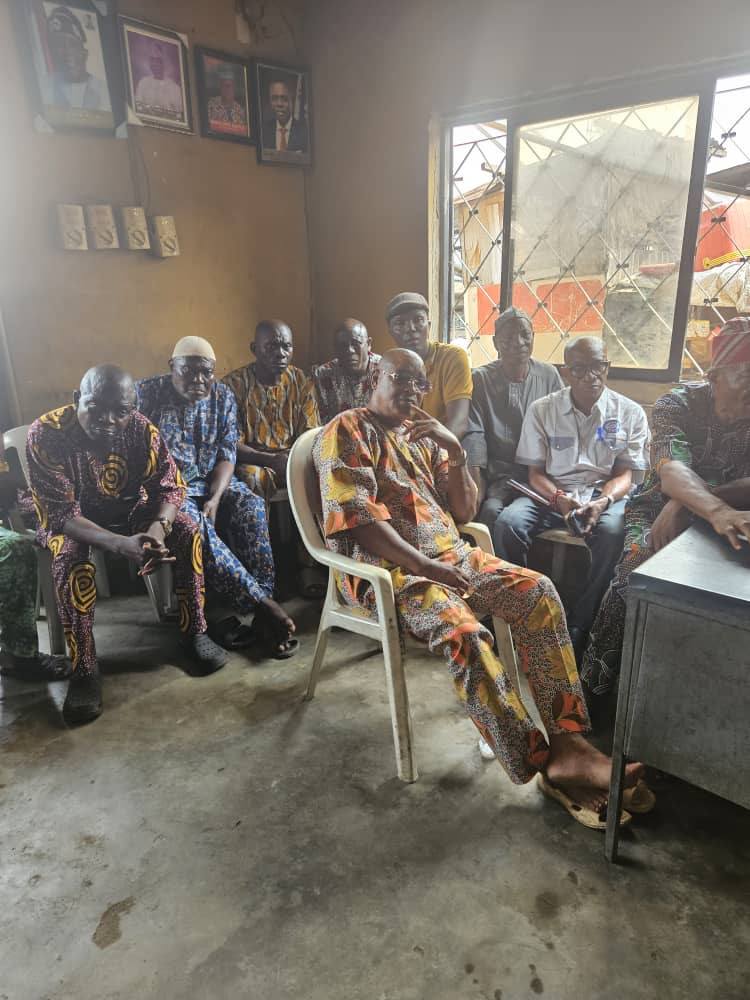
Some have lost not only their businesses but also colleagues and friends.
For families who depended entirely on daily earnings from the market, survival has become a daily struggle.
“We are legitimate residents of Lagos State,” one trader said. “We pay our dues, yet we are treated as if we do not exist.”
Protests and Pleas for Help
In the months following the demolition, traders turned to protest as their last resort.
They marched to the Lagos State House of Assembly on March 28 and again on October 2, 2025, hoping lawmakers would listen.
But they say their demonstrations yielded no meaningful response.
Another protest organized by concerned residents was reportedly dispersed by security forces, with participants tear-gassed and beaten.
Still, the traders persisted.
They submitted petitions to the National Assembly and the Presidency, pleading for intervention. Yet, they say, those appeals have gone unanswered.. Their message remains simple: let them live and work.
“We urge the government to leave our market alone,” Hameed said. “We only want to continue our lawful means of livelihood.”
A Competing Claim
But the story of Owode-Onirin is not without dispute.
On the other side of the conflict is Engineer Akeem Abiodun Ariori, whose lawyer, Oluwasegun Owolabi, insists his client acted within the law.
“My client has nothing to do with the violence,” Owolabi said.
According to him, the land belongs to the Olowu family, which secured valid court judgments affirming their ownership. Ariori, he said, was engaged to enforce those legal rights.
Owolabi further stated that both the government and the traders were aware of the Olowu family’s legal claim.
He said the matter had been discussed at several stakeholder meetings, including one chaired by Lagos State Attorney-General Lawal Pedro (SAN), who reportedly clarified that allocation letters held by traders did not constitute legal ownership.
“At a stakeholders’ meeting, it was resolved that the land should be shared on a 60–40 basis,” Owolabi said, referring to an arrangement involving the Olowu family and the local government.
He also denied claims that Ariori participated in violence, insisting his client “has never taken the law into his hands.”
Between Law and Livelihood
At its heart, the Owode-Onirin crisis reflects a painful collision between legal claims and human survival.
For lawyers and landowners, the dispute may be about titles, judgments, and ownership.
But for traders, it is about something more immediate—livelihood, identity, and dignity.
Many now wander Lagos in search of new places to sell their goods. Some have exhausted their savings. Others have fallen into debt.
A few have given up entirely.
Yet, amid the uncertainty, hope persists.
Traders continue to appeal to the government and the nation, asking for recognition, justice, and a chance to rebuild.
Because for them, Owode-Onirin was never just about spare parts.
It was about survival.
And survival, they say, is worth fighting for.