

Nigerian journalist, poet and novelist, Anote Ajeluorou, has described his novel, Brides of Infidels, as a conscious literary response to Nigeria’s prolonged insecurity crisis, saying the work seeks to humanise the pain of victims and sustain national attention on a tragedy that has persisted for more than a decade.
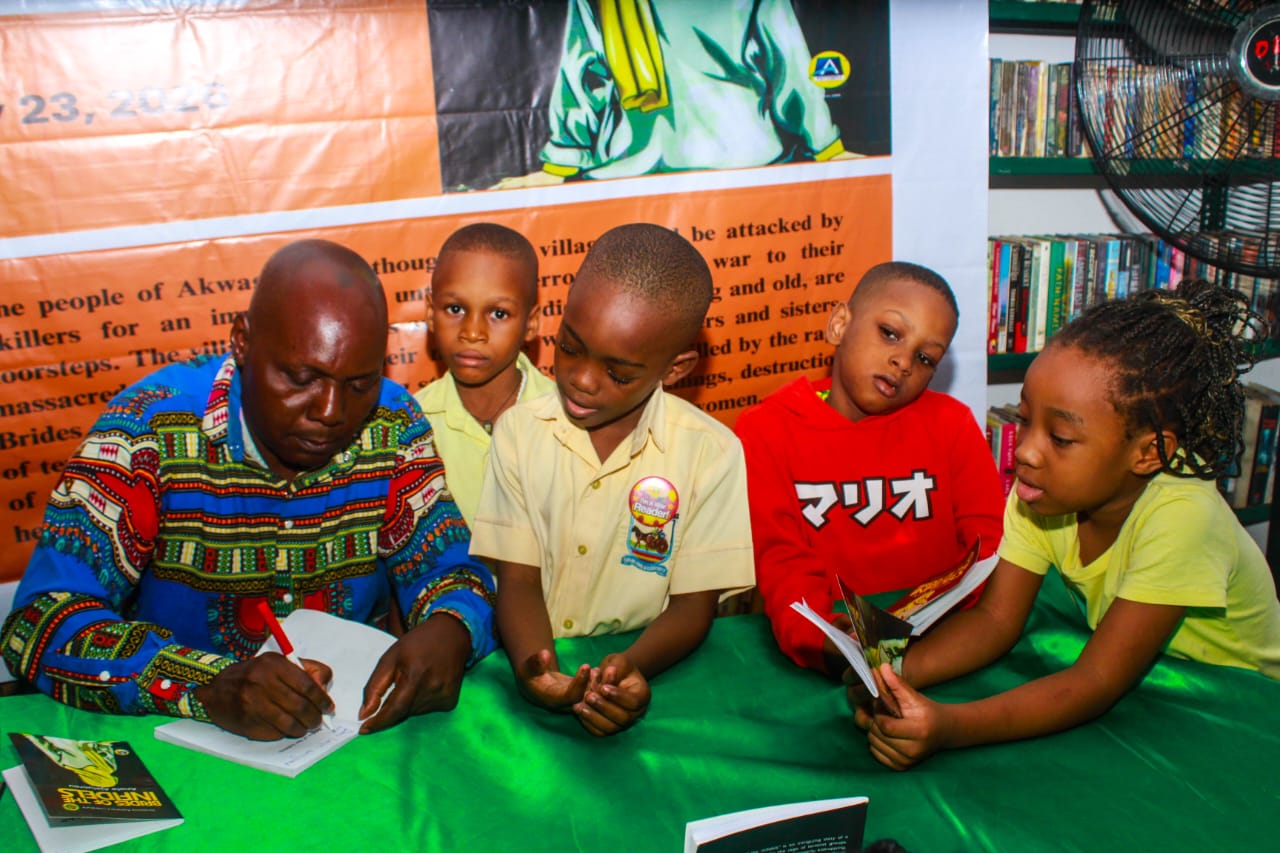
Ajeluorou spoke during a book reading and interactive discussion session held at the CRIMMD Museum and Library, Ajao Estate, Lagos, as part of the Book Trek Community Literacy Outreach programme. The event drew students, educators, writers, cultural practitioners and residents of the community.
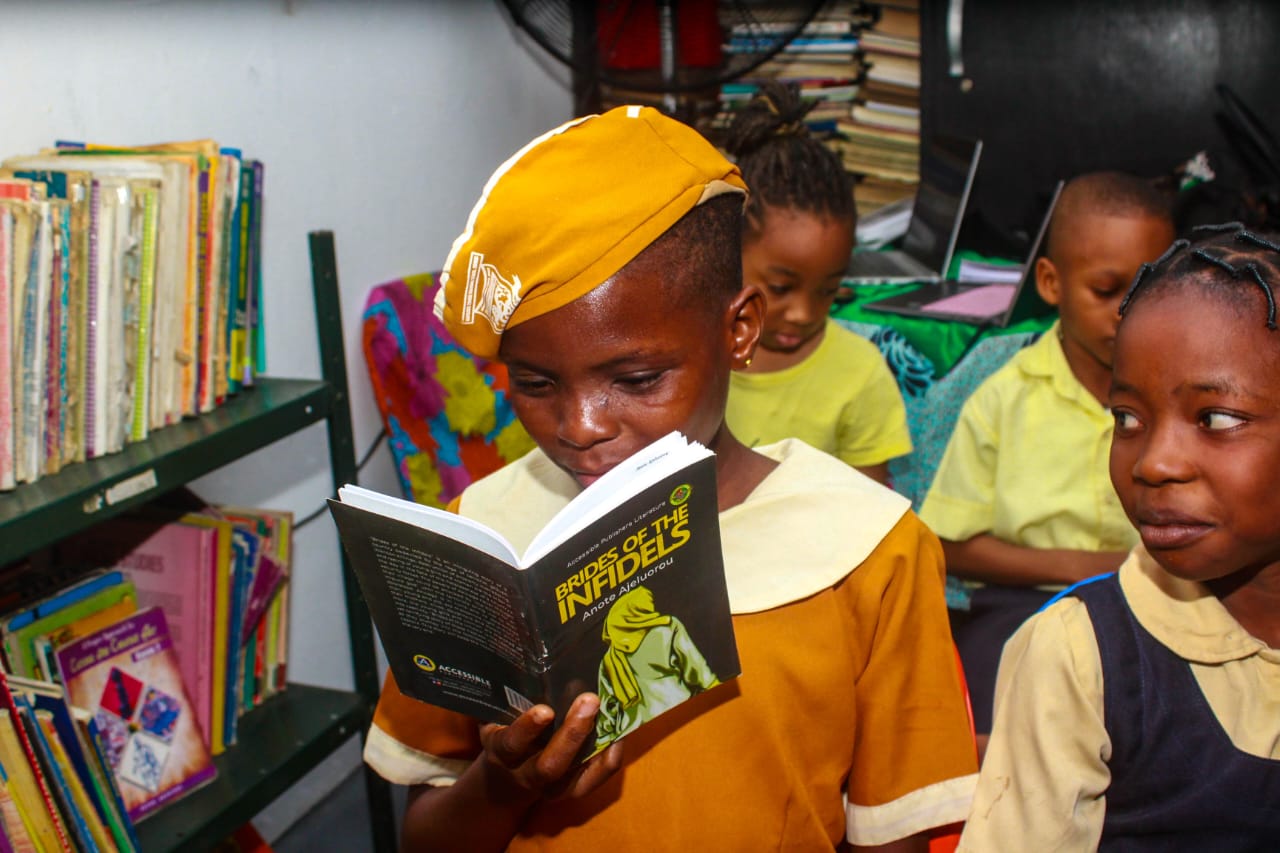
According to the author, Nigeria has steadily fallen behind the times in addressing security challenges that have remained unresolved for over 12 to 14 years. He lamented what he described as a culture of denial by government authorities, citing recent incidents in Kaduna State where worshippers were abducted by terrorists, an occurrence initially disputed by the state government before it was later acknowledged.
He said such denial undermines public confidence and raises concerns about the government’s preparedness to protect citizens across the country. Ajeluorou explained that Brides of Infidels is his fictional attempt to interrogate this failure and to show how insecurity has truncated the lives of thousands of Nigerians.
Drawing from his experience as a journalist, Ajeluorou said the idea for the novel emerged during the height of the Boko Haram insurgency, particularly following the abduction of the Chibok schoolgirls. He recalled closely following reports in newspapers and on social media at the time, noting that the scale of the violence and the seeming helplessness of victims compelled him to respond creatively.
“As a writer, I felt the need to lend my own small voice to this raging national tragedy,” he said, adding that literature remains a powerful tool for raising cultural consciousness and ensuring that the suffering of victims does not fade into statistics.
The novel centres on the story of a young girl from a northern Nigerian community whose education is violently interrupted when insurgents attack her village. Through her experience, Ajeluorou explores themes of displacement, forced marriage, sexual violence, loss and survival, while also reflecting on the broader impact of terrorism on families and communities.
He stressed that the book is not limited to the experience of the girl child alone, but deliberately broadens its scope to include the neglected trauma of the boy child. Ajeluorou explained that some male characters in the novel are forcibly conscripted into fighting after their communities are attacked, handed weapons and compelled to kill under the threat of death.
According to him, the story also exposes deeper layers of social injustice, including early marriage, generational poverty and health complications such as vesicovaginal fistula, which further marginalise women and fuel cycles of vulnerability.
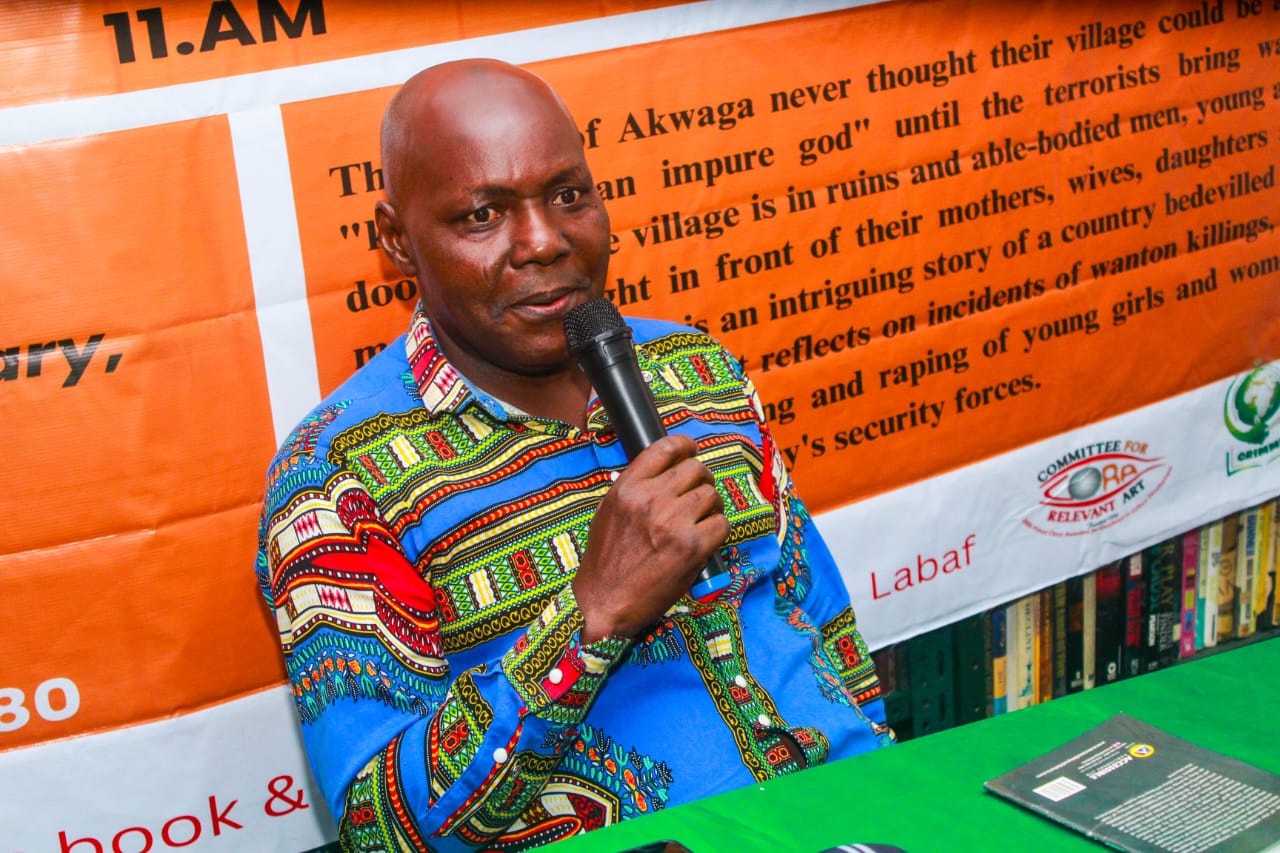
Ajeluorou was careful to separate religion from extremism, stating that Islam is a religion of peace and should not be blamed for the atrocities committed by terrorists. He argued that those who hide behind religion to justify violence cannot claim to share the same spiritual values they profess.
He criticised government policies that emphasise the rehabilitation of bandits without giving equal attention to victims and traumatised communities. He also condemned the continued existence of the Almajiri system in northern Nigeria, describing it as a social failure that leaves children exposed to exploitation and radicalisation.
He questioned the commitment of governments in affected regions to education, noting that initiatives such as the Almajiri schools introduced during the Goodluck Jonathan administration were abandoned after his exit from office. According to Ajeluorou, failure to prioritise education has allowed insecurity to thrive.
Speaking directly to students at the event, the author urged them to value education, remain disciplined and avoid distractions that could derail their academic progress. He also cautioned parents against unmonitored smartphone use by children, warning that excessive phone engagement affects reading habits and academic focus.
Founder of the CRIMMD Library and Museum, Dr. Raphael James, also addressed participants, shedding light on the vision and impact of the institution. Dr. James, a Nigerian archivist and historian, said the Centre for Research, Information Management and Media Development was established in December 2004 to provide young Nigerians with access to books, knowledge and historical resources.
He noted that the organisation recently relocated to Ajao Estate, making the Brides of Infidels reading the first major literary event at the new location. While the library had operated for years without charging users, he explained that rising operational costs have made modest fees necessary to sustain its services.
Dr. James said the library was founded to challenge the notion that Nigerians do not read, arguing instead that many lack access to books due to economic constraints. He revealed that the institution has helped nurture several outstanding individuals, including medical doctors, engineers, a pilot and one of Nigeria’s youngest ICAN qualifiers.
He further disclosed that CRIMMD has expanded to include the Museum of Nigerian History, Nigeria’s pioneer private history museum, established to document, preserve and reinterpret Nigerian history. According to him, the museum not only houses artefacts but also conducts research aimed at correcting historical inaccuracies and strengthening national consciousness.
Dr. James emphasised the importance of historical awareness, noting that a society that does not understand its past risks losing its sense of direction. He said CRIMMD’s interactive learning spaces and educational exhibits are designed to make history engaging for young people while fostering a deeper appreciation of Nigeria’s heritage.
The event concluded with questions and reflections from participants, reinforcing the role of literature, libraries and cultural institutions in sustaining dialogue around insecurity, education and national responsibility.


Ajeluorou’s Brides of Infidels gives human face to Nigeria’s insecurity crisis




Leave a Reply





Popular Stories
-

Lagos PDP senatorial candidate is dead
-
Lagos lawmaker defects to ADC
-
Adekunle Ojora dies at 93
-
‘Plan’ to replace Shettima as Tinubu’s running mate in 2027: Read APC’s reaction
-
Tinubu approves posting of four ambassador-designates to U.S., UK, others (see details)
-
Rivers monarch escapes assassination, sustains gunshot wound



Latest Stories








© 2026 Published by SWAAYA LIMITED, Plot 20, Block G, Scheme 1, Residential 3, OPIC Beachland Estate, Lagos/Ibadan Expressway, Lagos. Gabriel Akinadewo, MD/CEO 08023010222, 08094000056, 08052097814.